
Foreword
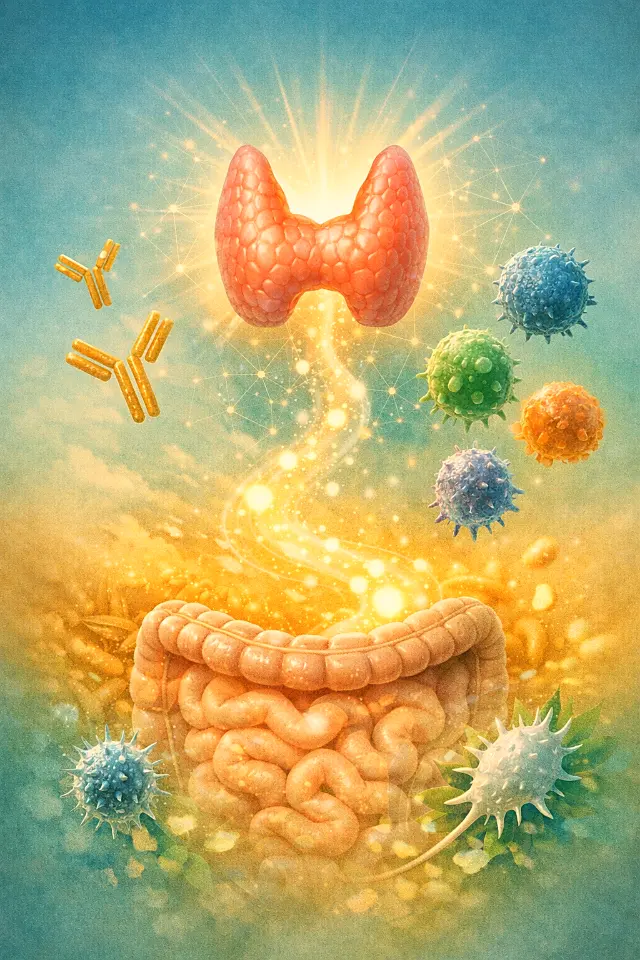
Autoimmune diseases are now a major public health challenge. They reflect dysregulation of the immune system: instead of defending the body, it attacks its own tissues. Graves' disease illustrates this paradox: an overactive thyroid stimulated by antibodies, with sometimes striking manifestations. The increasing frequency of these conditions raises questions. Polyarthritis, multiple sclerosis, lupus, type 1 diabetes, and celiac disease now affect millions of people.
Why does our finely regulated immune system become dysregulated? Research highlights several factors:
- Chronic stress, which disrupts neuroimmune balance and promotes reactions against the body's own tissues.
- Modern nutrition, profoundly transformed over ten millennia, which exposes the body to foods to which it is not genetically adapted.
- Pollutants and infections, which can act as triggers or amplifiers.
This reflection echoes the famous quotation by Dr. Michaël Rosenbaum: ‘We are not genetically adapted to the foods introduced into our diet over the last 10,000 years.’
This observation forms the basis of the hypotoxic approach: return to a diet closer to our origins, rich in plant foods, fiber, and essential nutrients, and free of pro-inflammatory substances.
In Graves' disease, this approach is particularly meaningful. Autoimmune hyperthyroidism is not solely a matter of medications or surgery: it forms part of an overall dynamic in which lifestyle, diet, and stress management play a decisive role. Patients who adopt a suitable lifestyle often notice improved symptoms and better treatment tolerance.
The Family Clinic approach rests on a strong conviction: health is not limited to the absence of disease but involves actively seeking lasting balance. Understanding and acting are the guiding thread of this work. Understanding, to stop being at the mercy of the disease. Acting, to regain control of one's health.
As you read this document, you enter a world in which modern medicine engages with nutrition, psychology, and prevention. Every page is designed to be readable, useful, and applicable. Every illustration aims to make concrete what might seem abstract. Every recipe is conceived to combine pleasure and health.
Graves' disease is not an inevitable fate. It is a challenge, certainly a complex one, but one that can be met through an integrated approach. This document invites you to take a step: from knowledge to action, from theory to practice, and from illness to restored health.
Overview of the disease
Graves' disease, or autoimmune hyperthyroidism, is one of the most common endocrine conditions. It affects approximately 1% of the French population, with a marked female predominance: it is estimated to affect four women for every man. This imbalance illustrates the role of hormonal and immune factors in the development of the disease.
It is an autoimmune condition: the immune system, which is supposed to protect the body, produces antibodies directed against thyroid receptors. These antibodies stimulate the gland excessively, increasing thyroid hormone secretion. Metabolism accelerates uncontrollably, causing weight loss, palpitations, nervousness, insomnia, and sometimes striking eye manifestations (exophthalmos).
The disease often develops in a context of intense stress or after a viral infection. These factors act as triggers by disrupting immune balance already weakened by genetic predisposition. Patients frequently report an episode of psychological tension or a common viral illness before symptoms appear.
From an epidemiological perspective, Graves' disease illustrates the complexity of autoimmune diseases:
- It combines genetic susceptibility,
- environmental factors (stress, infections, pollution),
- and hormonal influences, particularly in women.
This interaction explains the diversity of clinical presentations and variability in disease progression. Some patients experience moderate forms that resolve spontaneously, while others develop severe forms requiring prolonged treatment.
Understanding this disease is essential for patients and doctors alike. It helps anticipate complications, adapt treatments, and incorporate preventive measures. The role of nutrition and stress management, often overlooked, deserves particular attention: a suitable lifestyle can reduce symptom severity and improve tolerance of therapies.
This introductory chapter aims to establish the foundations: frequency, patient profiles, autoimmune nature, and triggers. It opens the way to later discussions of immunological mechanisms, treatment options, and the contribution of the hypotoxic approach.
Clinical signs
Graves' disease presents with a set of characteristic clinical signs related to excess thyroid hormones and autoimmune reactions. These manifestations often help guide diagnosis quickly.
Signs of thyrotoxicosis
Hyperthyroidism causes a general acceleration of metabolism. Patients experience:
- Tachycardia: the heart beats faster, sometimes irregularly, causing palpitations and shortness of breath.
- Weight loss: despite a preserved appetite, weight loss is rapid and marked.
- Heat intolerance: intolerance of heat, profuse sweating, and feeling unwell in hot surroundings.
- Polydipsia: an increased need to drink, related to increased metabolic exchanges.
- Tremors: fine, rapid tremors visible in the hands, reflecting neuromuscular overactivity.
- Nervousness: irritability, anxiety, insomnia, and changes in temperament.
- Goiter: enlargement of the thyroid, sometimes visible to the naked eye or palpable in the neck.
These signs reflect the uncontrolled acceleration of metabolism and explain the paradoxical fatigue patients feel: apparent energy that rapidly becomes exhausting.
Eye manifestations
The eyes are particularly affected in Graves' disease, giving the clinical picture a striking dimension. The following are observed:
- Exophthalmos: protrusion of the eyeballs, often bilateral, producing a characteristic appearance.
- Dryness and burning: chronic irritation related to increased corneal exposure.
- Diplopia: double vision resulting from involvement of the eye movement muscles.
- Photophobia: discomfort in light, increasing visual fatigue.
- Eyelid retraction: a fixed-stare appearance, sometimes associated with inability to close the eyes completely.
- Optic nerve involvement: in severe forms, a risk of irreversible visual impairment.
These eye manifestations result from immune infiltration of retro-orbital tissues, causing edema, inflammation, and fibrosis. They can progress independently of thyroid signs and require specific management.
Additional investigations
Diagnosis of Graves' disease relies on a set of additional investigations that confirm autoimmune hyperthyroidism, clarify its mechanisms, and guide management.
Thyroid scintigraphy
Scintigraphy is a functional imaging test that measures uptake of a radioactive tracer by the thyroid gland. In Graves' disease, homogeneous, increased uptake is observed throughout the gland. This result reflects diffuse overactivity, unlike toxic nodules, which show localized uptake. Scintigraphy therefore distinguishes autoimmune hyperthyroidism from other causes of hyperthyroidism.
Testing for autoantibodies
Graves' disease is an autoimmune condition: the immune system produces antibodies directed against the thyroid. The main antibodies tested for are:
- Antimicrosomal antibodies (or thyroid peroxidase antibodies), indicating an immune attack on thyroid cells.
- Antithyroglobulin antibodies, directed against a key protein in hormone synthesis.
- TSH receptor antibodies, characteristic of Graves' disease. These antibodies stimulate the TSH receptor, causing excessive thyroid hormone secretion.
The presence of these autoantibodies confirms the autoimmune nature of the disease and distinguishes it from other, nonautoimmune forms of hyperthyroidism.
Hormone measurements
Laboratory tests are essential for assessing thyroid function. In Graves' disease, findings include:
- High T3 and T4 levels, indicating hormone overproduction.
- Profoundly suppressed TSH, because the pituitary attempts to restrain the thyroid by reducing its stimulation.
This laboratory profile is typical of autoimmune hyperthyroidism. It allows both diagnosis and monitoring of disease progression and treatment effectiveness.
Course and treatment
Graves' disease follows a variable course, marked by phases of hyperthyroidism of varying intensity, partial remissions, and risks of recurrence. Management relies on several treatment options, each with advantages and limitations.
Synthetic antithyroid drugs
These medications (such as carbimazole or propylthiouracil) inhibit thyroid hormone production. They allow rapid control of symptoms and achievement of euthyroidism within a few weeks. Their use often continues for several months. However, recurrences are frequent after treatment stops, and side effects (allergies, liver damage, agranulocytosis) can occur.
Beta-blockers
They do not treat the cause but effectively relieve symptoms associated with hyperthyroidism: tachycardia, tremors, and nervousness. They improve quality of life while awaiting the effects of antithyroid drugs or other treatments.
Radioactive iodine
Given orally, radioactive iodine gradually destroys overactive thyroid cells. This treatment is effective and definitive, but it often causes thyroid insufficiency requiring lifelong hormone replacement. It is contraindicated in pregnant women and must be used cautiously in young patients.
Surgery
Thyroidectomy (partial or total removal of the thyroid) is indicated in severe forms resistant to medications or in cases of a large goiter. It permits rapid control of the disease but carries risks of complications (recurrent laryngeal nerve injury, hypoparathyroidism) and often leads to permanent hypothyroidism.
Treatment limitations
Despite these options, several limitations remain:
- Frequent recurrences after antithyroid drugs.
- Thyroid insufficiency after surgery or radioactive iodine, requiring lifelong hormone replacement.
- Limited effectiveness against eye disorders, which sometimes progress independently of hyperthyroidism.
These limitations explain growing interest in complementary approaches, particularly hypotoxic nutrition and stress management, which aim to reduce inflammation and improve the underlying immune state.
Hypothesis about pathogenesis
Graves' disease illustrates the complexity of autoimmune diseases. Its pathogenesis rests on a subtle interaction between genetic, environmental, and immunological factors, leading to inappropriate stimulation of the thyroid gland and specific eye manifestations.
Genetic and environmental factors
Genetic predisposition is well established: an association with the HLA-DR3 allele is frequently found in patients. However, genetics alone is not enough. Environmental factors act as triggers: chronic stress, common viral infections (viral illnesses), or exposure to certain pollutants. These factors disrupt immune balance and promote disease development in predisposed individuals.
TSH receptor antibodies
The central mechanism relies on production of antibodies directed against the TSH receptor. Unlike inhibitory antibodies observed in other diseases, these are stimulating: they activate thyrocytes as though excess TSH were present. The result is increased T3 and T4 secretion, responsible for signs of thyrotoxicosis.
Molecular mimicry and the role of infection
An infectious agent could be involved through molecular mimicry. The bacterium Yersinia enterocolitica has been proposed: some of its antigens may resemble the TSH receptor, inducing immune confusion. In attacking the bacterium, the immune system might develop antibodies that also bind to the thyroid, triggering autoimmunity.
Immune mechanisms
Pathogenesis involves a complex cascade: activation of CD30 T lymphocytes, secretion of interferon γ, a pro-inflammatory cytokine, and stimulation of B lymphocytes, responsible for antibody production. This immune cooperation maintains inflammation and thyroid stimulation.
Eye disease pathogenesis
The eye manifestations of Graves' disease rely on a distinct mechanism. Retro-orbital tissues are infiltrated by immune cells that activate fibroblasts. These produce excess glycosaminoglycans, causing edema and inflammation. In parallel, fibroblasts become adipocytes, causing enlargement of retro-orbital adipose tissue. Together, these processes lead to exophthalmos, eyelid retraction, and, in severe forms, optic nerve involvement.
As a synthesis: Graves' disease therefore results from a multifactorial interaction: genetic predisposition (HLA-DR3), environmental triggers (stress, viral illness), an inappropriate immune response (TSH receptor antibodies), and specific mechanisms explaining eye involvement. This understanding opens the way to targeted therapeutic strategies aimed not only at the thyroid but also at overall immune balance.
Clinical results
Graves' disease, like other autoimmune conditions, raises questions about the role of lifestyle and diet in its progression. Clinical trials and observations in practice show that the hypotoxic diet can have a significant impact on the course of the disease.
Several patients adopting this dietary pattern experienced rapid remissions, sometimes within a few weeks. Thyrotoxic symptoms (tachycardia, tremors, nervousness) diminished, while eye signs showed gradual improvement. What is striking in these observations is the durability of the results: some patients had no relapse for several years, despite stopping or reducing medications.
The hypotoxic diet probably acts by reducing systemic inflammation and modulating the immune response. By eliminating pro-inflammatory foods (gluten, dairy products, refined sugars) and favoring fresh plant foods, quality oils, and gentle cooking, it restores a favorable biological balance.
Conclusion
Graves' disease illustrates the complexity of autoimmune diseases: a subtle interaction between genetics, environment, and immunity that leads to sometimes striking hyperthyroidism and marked eye involvement.
This booklet has shown that, despite the seriousness of this condition, there are paths to understanding and action that allow people to regain control of their health. Conventional treatments (synthetic antithyroid drugs, beta-blockers, radioactive iodine, surgery) offer effective but imperfect solutions. They reduce symptoms and stabilize thyroid function but carry risks of recurrence or permanent hypothyroidism. Eye disorders, meanwhile, often remain resistant.
This is why incorporating a complementary approach is particularly meaningful. By reducing inflammation and modulating the immune response, the hypotoxic diet has shown remarkable clinical results: lasting remissions, improved eye signs, and reduced medication requirements. The observation of Mrs. C. is a living illustration: a lasting transformation in which food becomes a therapeutic tool.
Beyond treatments, stress management and attention to lifestyle are essential. Chronic stress acts as a powerful trigger; learning to recognize and control it is a key step in preventing relapses.
This booklet is more than a medical guide. It is an invitation to consider health as an overall balance: nutrition, immunity, emotions, and environment. Graves' disease is not an inevitable fate but a challenge that can be met through an integrated approach, in which modern medicine engages with prevention and nutrition.
As we close these pages, let us remember three messages:
- Understand the mechanisms of the disease to stop being at its mercy.
- Act through informed choices, combining treatments and a healthy lifestyle.
- Hope, because remission is possible and health can be restored.
The wisdom of the living body reminds us that every imbalance is also an opportunity to readjust our lifestyle. Far from being a sentence, Graves' disease can become the starting point of a rebirth.