
Foreword
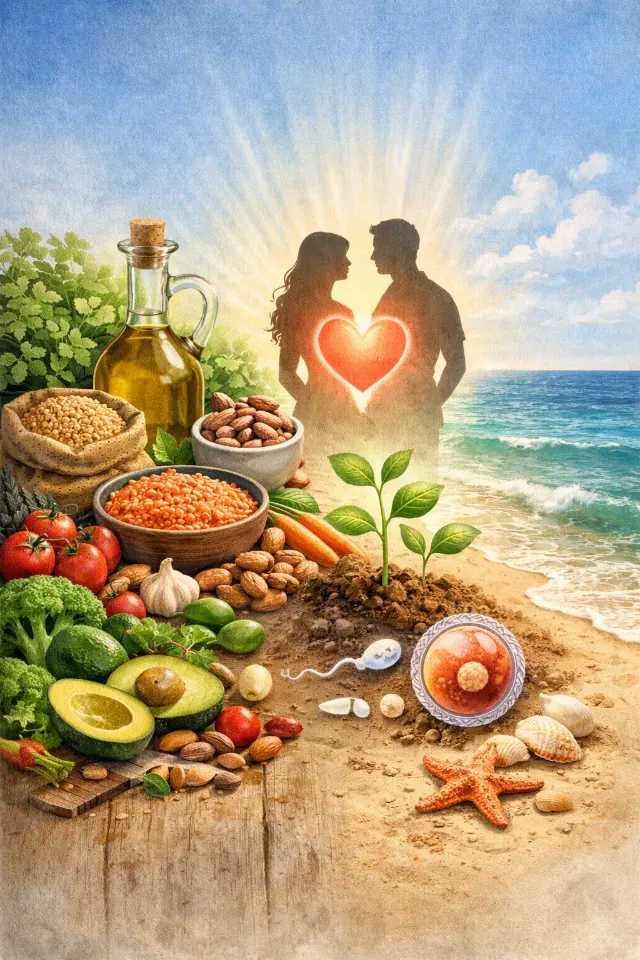
Fertility is not only a matter of biology; it is a subtle symphony between the body, the mind and the earth that nourishes us.
In a world where the pace accelerates, meals are eaten hastily and foods lose their soul, balance grows fragile. Infertility then becomes the silent mirror of a deeper disorder: our connection with nature and ourselves.
This booklet arose from an observation and a hope.
- The observation: modern life, through its excesses and lacks, alters the mechanisms of fertility.
- The hope: gentle, regenerative hypotoxic nutrition can restore this lost dialogue between our cells and life.
Indeed, infertility is not inevitable; it is often a gentle alarm, an invitation to listen to what the body whispers. Before speaking of treatments, we must speak of the terrain: our cells, emotions and eating habits. Fertility is more than a biological function; it reflects an overall balance, that of life flowing freely.
In modern life, stress, sedentary habits, industrial meals and lack of sleep disrupt this harmony. Hormones fall out of tune, cycles become irregular and couples grow weary without understanding why. This is where hypotoxic nutrition enters: it does not promise a miraculous cure, but restores dialogue between the body and nature.
This guide invites you to rediscover simplicity: a meal prepared with local products, conscious breathing and a calmer rhythm. Every action, ingredient and flavor then becomes an act of care.
Understanding infertility
- When the body pauses
Infertility is not a failure; it is a biological pause, often caused by an overall imbalance. In its wisdom, the body sometimes suspends fertility to protect itself: it waits for favorable terrain, lower inflammation and the return of nutrients.
- Common causes
- Chronic stress: disrupts sex hormones and blocks ovulation or spermatogenesis.
- Unbalanced diet: excess sugars, saturated fats and ultra-processed products promote inflammation and insulin resistance.
- Hormonal disorders: polycystic ovary syndrome (PCOS), hyperprolactinemia, hypothyroidism and progesterone deficiency.
Note: Since May 12, 2026, PCOS has officially been renamed SMOP, the French acronym for “Polyendocrine Ovarian Metabolic Syndrome.”
- Environmental factors: endocrine disruptors, tobacco, alcohol and lack of sleep.
- The role of the microbiota
The intestinal microbiota directly influences fertility: a bacterial imbalance can alter hormone production and gamete quality. Hypotoxic nutrition rich in fiber, vegetables and plant oils promotes a healthy microbiota and therefore better hormonal regulation.
- The integrative approach
Infertility is better understood when connected to the whole body: digestion, sleep, emotions and physical activity. Hypotoxic nutrition then becomes a comprehensive therapeutic means, acting on inflammation, blood sugar, oxidative stress and cellular vitality.
Modern changes in everyday life
The frantic pace
Modern life imposes a rapid tempo: long working hours, travel and meals eaten outside the home. This rhythm fragments a couple's time and reduces the space devoted to home cooking. The result: plates fill with industrial foods, poor in nutrients and rich in toxins.
- Invisible impacts.
- Disrupted biological clock: late meals, shortened sleep and disturbed hormonal cycles.
- Permanent stress: high cortisol blocks fertility and intensifies inflammation.
- Sedentary living: less movement, more insulin resistance.
- The loss of traditions.
In the past, meals were rituals: shared, simple and nourishing. Today, they become “quick breaks,” often solitary and disconnected from nature and conviviality. This cultural break weakens the connection between food and health.
- Toward awareness.
This chapter invites us to observe our everyday habits:
- note mealtimes,
- identify industrial foods,
- measure the time devoted to home cooking.
It is the first step toward reconciliation with balance.
Disorders linked to an unbalanced diet
- High blood sugar and unstable insulin
Meals rich in fast-release sugars and industrial products cause blood sugar spikes. The pancreas becomes exhausted, insulin becomes ineffective and hyperinsulinism develops. This imbalance directly disrupts fertility by blocking ovulation and altering sperm quality.
- Silent inflammation
Saturated fats, fried foods and additives sustain chronic inflammation. Joints, the liver and the heart suffer, but so do reproductive organs. Inflammation weakens the endometrium and reduces gamete vitality.
- Overweight and obesity
Excess calories combined with sedentary habits cause abdominal fat accumulation. Fat tissue becomes a disruptive hormonal organ: it secretes excess estrogen, disrupts cycles and intensifies fertility disorders.
- Hormonal disturbances
Dietary imbalance promotes Polyendocrine Ovarian Metabolic Syndrome (SMOP), commonly known as polycystic ovary syndrome (PCOS), hypothyroidism and hyperprolactinemia. These hormonal disorders are amplified by stress and lack of sleep, creating a vicious circle.
Hypotoxic nutrition as a solution
- Basic principles
A hypotoxic menu is not a diet: it is a gentle way of nourishing the body and restoring vitality. It favors local, simple foods and balanced food combinations for digestion.
- Reduction of dietary toxins (refined sugar, saturated fats, additives).
- Valuing living foods: vegetables, fruit, legumes and local plant oils.
- Respect for biological rhythms: regular meals and calm digestion.
- Benefits for fertility
- Hormonal regulation (estrogen/progesterone balance, improved spermatogenesis).
- Reduced inflammation and oxidative stress.
- Support for the intestinal microbiota, a key to hormonal regulation.
- Foods to favor / avoid
- Favor: green vegetables, legumes, local whole grains (quinoa, chickpeas, millet), olive oil and fresh fruit.
- Limit/avoid: sodas, industrial pastries, charcuterie, fried foods and ultra-processed products.
- Example of a balanced day
| Time | Example meal | Health objective |
|---|---|---|
| Breakfast | Sweet potato cream with plant-based milk, dates and flaxseeds | Stable energy, digestive gentleness |
| Lunch | Quinoa with root vegetables, chickpeas and lemon-flavored olive oil | Anti-inflammatory action, hormonal regulation |
| Dinner | Zucchini and fennel soup, steamed fish fillet and apple compote | Lightness, restorative sleep |
Advice for active couples
- The rhythm of everyday life
Fertility is nourished by regularity. In modern life, couples must learn to slow down: eat at set times, sleep enough and breathe together. These simple actions recreate terrain favorable to life.
- Mindful eating
Cooking becomes an act of presence. Choosing local products, preparing meals together and enjoying them without screens are rituals strengthening the bond and calming the hormonal system.
- Movement and relaxation
Gentle physical activity (walking, yoga, swimming) stimulates circulation and reduces oxidative stress. The body regains its fluidity, hormones their balance.
Moving means breathing life.
- Emotional balance
Fertility cannot be commanded; it is welcomed. Cultivating patience, gratitude and tenderness allows couples to go through this period serenely.
Inner peace is the first fertile soil for conception.
The medical journey
- The alliance between medicine and lifestyle
Fertility is built at a crossroads: that of science and everyday life. Hormonal assessments, ultrasound examinations and medical treatments are essential, but their effectiveness is amplified when the terrain is prepared through healthy nutrition and a balanced lifestyle.
- The doctor's role
The doctor supports, explains and adjusts. Their role is not to replace nature, but to support it. The hypotoxic approach then becomes an ally: it reduces inflammation, stabilizes blood sugar and improves the response to treatments.
- Comprehensive follow-up for the couple
A fertility journey is more than a protocol; it is a human adventure. Couples are invited to communicate with their practitioner, express emotions and understand the stages.
Medicine sheds light, but life heals.
- Complementarity and patience
Results are not always immediate. The body needs time to regenerate. Hypotoxic nutrition, stress management and restorative sleep create terrain favorable to medical success.
Conclusion
Fertility is not a race; it is listening. It arises where the body regains peace, where the earth offers its fruits and where couples relearn to breathe together. Every meal becomes an act of love, every gesture care, every day a promise.
Hypotoxic nutrition is not a constraint; it is a path back to oneself. It invites slowness, gratitude and simplicity. It reconciles science and nature, doctor and patient, body and mind.
May these pages remind you that life is cultivated like a garden: with patience, light and trust. And that in every seed, a world is already becoming.