
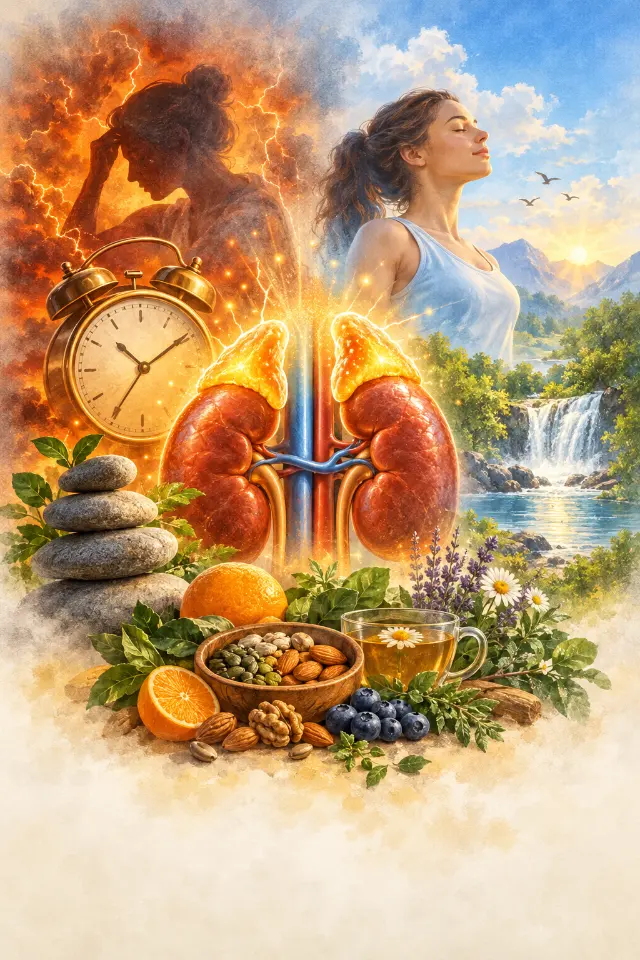
Stress is part of life. It has accompanied human beings since their origins and, contrary to what people sometimes believe, it is not always harmful.
Without stress, our ancestors probably would not have survived. In the face of danger, the body triggers a series of reactions designed to increase the chances of survival. The heart speeds up, breathing becomes faster, the muscles get ready to act and the brain focuses all its attention on the threat.
This reaction is called the stress response. It is a natural, essential and perfectly normal mechanism. The problem does not arise when stress occurs occasionally. The problem arises when stress becomes permanent.
Our body is designed to cope with temporary periods of tension followed by recovery phases. Yet modern life often exposes the body to an almost continuous series of concerns: financial difficulties, work pressures, family problems, social isolation, anxiety-provoking news, chronic illnesses, uncertainty about the future.
All these situations can keep the stress mechanisms activated for weeks, months or sometimes years. In this context, stress stops being a protective tool and becomes a source of wear.
At the center of this reaction is a hormone called cortisol. Cortisol is often presented as the stress hormone. This definition is correct but incomplete. In reality, cortisol also plays many essential roles in the body.
- It takes part in regulating energy.
- It influences blood sugar.
- It is involved in the immune response.
- It takes part in the body’s adaptation to difficult situations.
Without cortisol, we could not live normally. As is often the case in biology, the problem is not its presence but its prolonged excess. When stress becomes chronic, cortisol production can remain high for too long. This situation gradually leads to various consequences that affect virtually every organ.
- The brain is among the first structures affected. In the short term, stress often improves alertness. It helps you react quickly and focus your attention on an urgent task. But when this situation drags on, the opposite effect can appear. People under chronic stress frequently describe:
- difficulty concentrating;
- memory problems;
- mental fatigue;
- a loss of motivation;
- a feeling of psychological exhaustion.
The brain then operates in a near-permanent state of alert. Yet an alarm system is not designed to stay switched on without interruption. Over time, this overload can affect quality of life and overall well-being.
- Sleep is also strongly influenced by stress. Normally, the body gradually prepares the transition to rest over the course of the evening. But when a person remains worried or tense, this process becomes more difficult.
- Falling asleep is delayed.
- Nighttime awakenings multiply.
- Sleep becomes lighter.
- Recovery declines.
- A vicious circle can then set in.
- Stress disrupts sleep.
- Lack of sleep increases sensitivity to stress.
- Fatigue builds up.
- Overall balance gradually becomes more fragile.
- The cardiovascular system does not escape this influence.
- Under stress, the heart works harder. The heart rate increases and blood pressure tends to rise. These reactions are perfectly normal when they remain temporary. However, when they recur day after day, they contribute to faster wear of the cardiovascular system. This is one of the reasons why stress management is now considered an important preventive measure.
- The immune system is also affected. In the short term, certain defense reactions can be stimulated. But when the situation becomes chronic, immune balance becomes harder to maintain.
- The body constantly mobilizes its resources to face a threat that is often no longer physical but psychological. This permanent mobilization ends up costing energy.
- The muscles also suffer from prolonged stress. Many people notice tension in the neck, shoulders, back or jaw when they go through difficult periods. These repeated muscle contractions can promote pain, fatigue and discomfort. The body often expresses what the mind is trying to manage.
- Stress also affects eating behavior. Some people lose their appetite when they are worried. Others, on the contrary, feel an increased need for foods rich in sugar or calories. These reactions are part of the biological survival mechanisms inherited from evolution. In our modern environment, however, they can promote certain nutritional imbalances when they become repetitive.
- Over time, chronic stress also takes part in inflammatory mechanisms. As we saw earlier, low-grade inflammation is one of the silent drivers of aging. Specialists now consider chronic stress to be one of the factors capable of fueling this phenomenon.
This relationship explains why people who learn to manage their stress better often preserve their overall health more effectively. Fortunately, there are many ways to reduce this biological wear.
- The first is to accept a fundamental reality: it is impossible to eliminate stress completely from life. On the other hand, it is possible to change the way we respond to it.
- Physical activity is probably the most powerful tool. Walking, swimming, cycling, gardening, dancing: all these activities help the body release accumulated tension. Movement acts as a natural antidote to excess stress.
- Sleep is a second essential pillar. A rested brain handles difficulties better than an exhausted brain. Protecting your sleep therefore also strengthens your resistance to stress.
- Breathing plays an often underestimated role. A few minutes of slow, deep breathing can activate the biological mechanisms associated with calm and recovery. It is a simple, free tool that is accessible to everyone.
- Human relationships are also a precious resource. Sharing your concerns, receiving support or simply spending time with loved ones often helps reduce the emotional burden you feel. Human beings are not designed to face all of life’s difficulties alone. Social contact is a true protective factor.
Finally, it is useful to distinguish what depends on us from what does not. A large part of stress sometimes comes from events we cannot control. Focusing your energy on the actions that are truly possible often makes it possible to regain a sense of control that is more beneficial for health.
Aging in good health is not only about preserving your muscles or your arteries. It is also about protecting your emotional balance. A body continually subjected to stress wears out faster. Conversely, a person able to alternate effort and recovery, commitment and rest, action and serenity, offers their body conditions far more favorable to longevity.
Calm is not just a pleasant feeling. It is also a powerful tool for biological protection.
Family Clinic advice
Ask yourself every evening: “Did I give my body as much time today to recover as to make an effort?” Harmonious aging depends as much on periods of rest as on periods of action. Learning to recover is a true longevity skill.