
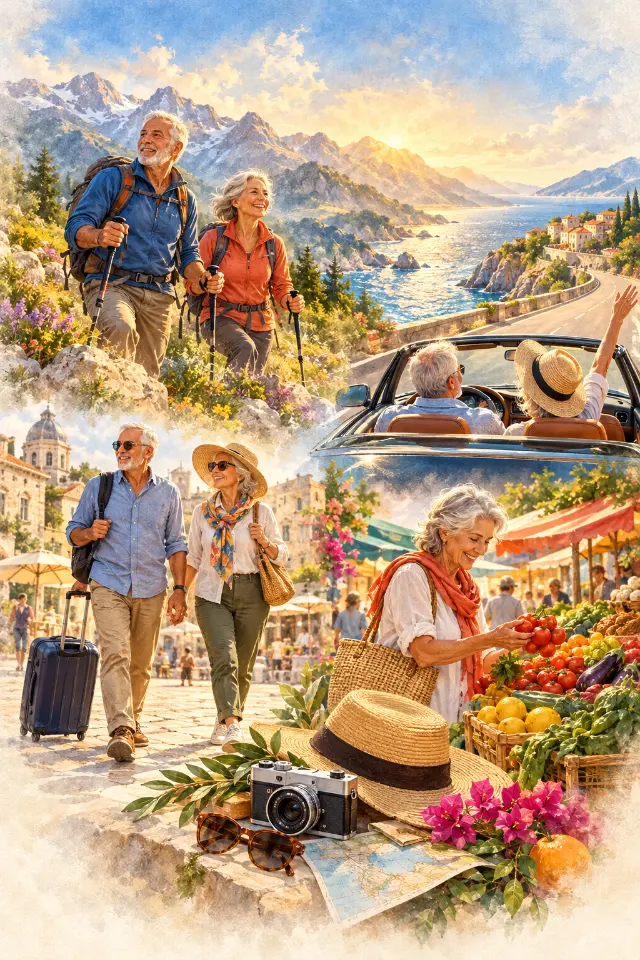
When they imagine aging, many people spontaneously think of illness or the loss of physical abilities. Yet what most often worries seniors is much more concrete.
- Will I be able to keep driving?
- Will I be able to travel?
- Will I be able to do my shopping on my own?
- Will I be able to climb the stairs in my house?
- Will I be able to enjoy my children, my grandchildren and my friends?
Behind all these questions lies an essential notion: independence. Independence is probably the true wealth of successful aging.
- Being able to decide on your activities.
- Being able to manage your daily life.
- Being able to move around freely.
- Being able to choose your way of life.
All these capacities contribute directly to well-being and quality of life. The good news is that independence does not depend solely on age.
Two people of the same age can have completely different levels of independence. Some remain very active past the age of eighty while others run into significant difficulties much earlier. This difference is largely explained by the habits accumulated over time.
- Independence is built every day. It rests on several pillars that can be maintained for a long time. The first is mobility. The ability to walk remains one of the best indicators of overall health. Walking makes it possible to do your shopping, visit loved ones, take part in social activities and maintain an active life. Every walk simultaneously maintains the muscles, joints, heart, lungs and brain.
Specialists now regard walking speed as a true marker of health. A person able to walk regularly and with ease often retains more independence in the years that follow.
Walking has several advantages: it is free, it requires no complicated equipment, it can be adapted to almost every fitness level, and it also lets you enjoy natural light and stay in contact with the outdoor environment.
- Balance is a second fundamental element. As people grow older, some become more vulnerable to falls. And a simple fall can sometimes have serious consequences. The fear of falling then frequently leads to moving around less.
This reduction in activity weakens the muscles and balance even further. A vicious circle can gradually set in. Fortunately, balance can be maintained. Regular walking, muscle-strengthening exercises, certain activities such as tai chi, stability exercises, movements that challenge coordination: all these practices help maintain this essential skill.
- Muscle strength also plays a central role. Being able to carry a shopping bag, being able to move an object, being able to get up easily from a chair, being able to climb a staircase: these actions depend directly on the quality of the muscular system. That is why preserving muscle mass holds such an important place in modern longevity strategies. As you grow older, it becomes crucial to keep using your muscles. Muscles that are used generally remain more functional than those that are gradually left inactive.
- Independence also depends on the brain. Managing your finances, planning a trip, following a route, making decisions, adapting to new situations: all these abilities require good cognitive function. That is why intellectual activities, reading, social exchanges and continuous learning remain so important after retirement.
The brain needs exercise just like the muscles. The more it is used, the more it retains its capacity to adapt.
- Vision and hearing also help maintain independence. These senses allow us to interact with the world around us. Reading, driving, communicating, recognizing faces, taking part in a conversation. Preserving these functions directly influences quality of life.
Many people sometimes hesitate to see a doctor when they notice a decline in their hearing or vision. Yet early care often makes it possible to limit the consequences of these difficulties on daily life.
- An active life also rests on social engagement. Some people imagine retirement as a period of complete rest. Rest is obviously necessary. However, withdrawing too much from social life can promote isolation and the gradual loss of certain skills. People who continue to take part in family, associative or community life often retain more vitality.
Joining an association, helping others, gardening, traveling, discovering new interests, taking part in a cultural activity: all these pursuits sustain motivation and the sense of being useful. And the sense of being useful is a powerful driver of longevity.
The regions of the world known for their exceptional life expectancy often have one thing in common: older people there retain an active role in society. They pass on their experience, they take part in family life, they remain involved in their community’s activities, they continue to have projects. This active presence seems to contribute to their vitality.
- Independence also depends on the environment in which we live. A well-organized home reduces the risk of falls. Suitable lighting improves safety. Spaces that encourage movement promote daily activity. Sometimes, simple adjustments can make everyday life considerably easier.
- It is also important to adopt a positive view of aging. Modern society often emphasizes the losses associated with age. Yet the years also bring valuable resources: experience, perspective, wisdom, self-knowledge, the ability to prioritize what matters most. Many people say they feel calmer, freer and more fulfilled after sixty than they did in their youth.
Longevity, then, is not only about avoiding disease. It is about continuing to live fully, remaining in charge of your own life and keeping the power to choose your activities and projects.
Every walk taken today, every exercise done, every new skill acquired, every relationship nurtured, every effort to preserve your health helps strengthen this independence.
The true success of aging does not lie in the number of years. It lies in the ability to keep living them according to your own choices. Because in the end, aging in good health means above all remaining free for as long as possible.
Family Clinic advice
Do not measure your aging in years, but in preserved capacities. As long as you can walk, learn, share, create and take part in the life around you, you keep investing in your independence. Every action that sustains this freedom is a true act of prevention.