
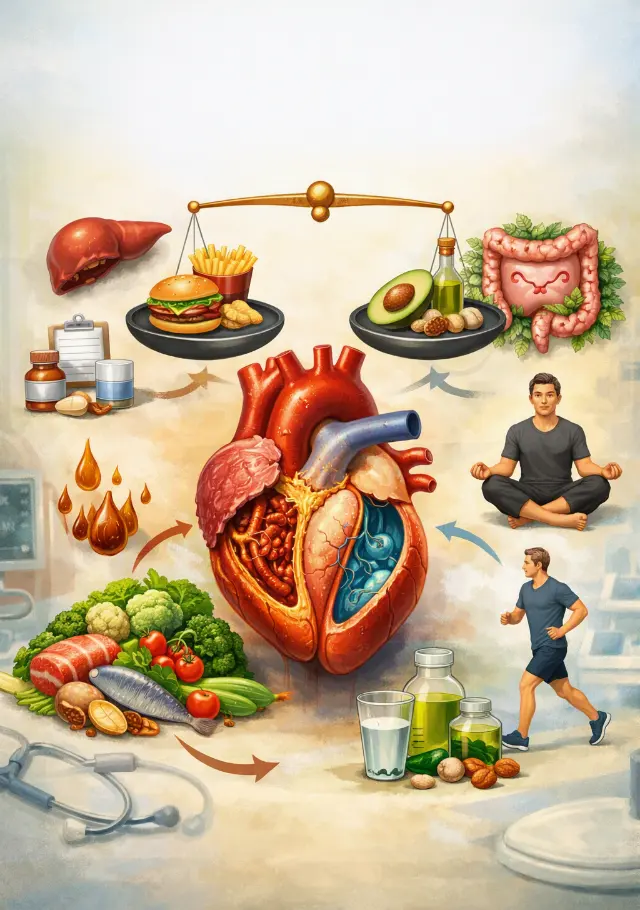
Foreword
Cholesterol is a molecule that has prompted passionate debate in the medical world for several decades. Too often reduced to a simple cardiovascular risk factor, it is presented as an enemy to fight by every means, whether restrictive diets or drug treatments. Yet this simplistic view obscures a fundamental biological reality: cholesterol is a vital substance, indispensable to the body's proper functioning. It is present in every cell membrane, ensuring stability and fluidity. It is the precursor of many steroid hormones, such as cortisol, estrogen and testosterone, which regulate essential functions including energy metabolism, reproduction and the stress response. It also participates in synthesizing vitamin D, essential to bone and immune health, and forming bile salts, necessary for fat digestion.
Beyond these structural and metabolic functions, cholesterol plays a little-known anti-inflammatory role. It helps stabilize cell membranes, protects against free radicals and limits excessive immune reactions. In this sense, it acts as a natural regulator of inflammation. The problem therefore lies not in cholesterol itself, but in its pathological transformation when oxidized. Under the influence of industrial food rich in saturated fats and refined sugars and cooked at high temperatures, cholesterol becomes denatured and toxic. This oxidized cholesterol accumulates in arterial walls, triggers an immune reaction and promotes atheromatous plaques, responsible for atherosclerosis and cardiovascular diseases.
Conventional medicine, focused on reducing laboratory values, tends to neglect this essential distinction between protective and oxidized cholesterol. It offers symptomatic treatments lowering overall cholesterol levels, without always considering its vital role in metabolism. Family Clinic holistic medicine adopts a different approach: it considers cholesterol as a whole, recognizing its physiological importance and seeking to prevent oxidation through adapted nutrition.
This booklet aims to restore cholesterol to its physiological role, understand the mechanisms of hypercholesterolemia and show how a hypotoxic diet can restore lipid balance and reduce chronic inflammation. It continues the work of pioneers such as Kousmine, Burger, Fradin and Seignalet, who demonstrated food's major impact on health. By adopting a qualitative vision of nutrition, it becomes possible to preserve cholesterol's essential functions, support mast cells in their mission of cleansing inflamed areas and prevent complications linked to metabolic waste accumulation.
Hypercholesterolemia and pathophysiology
Hypercholesterolemia is defined as an abnormal elevation of blood cholesterol, particularly LDL cholesterol, often called “bad cholesterol.” But this label is reductive: LDL is a transport lipoprotein, indispensable for carrying cholesterol to tissues that need it. The problem arises when these particles are oxidized and modified by environmental and dietary factors, becoming pathogenic.
- Pathophysiological mechanisms
Cholesterol is produced by the liver and absorbed by the intestine. Under normal conditions, it circulates in the blood as lipoproteins (LDL, HDL, VLDL) and participates in many metabolic processes. When food is rich in saturated fats, refined sugars and industrial products, or when the liver is overloaded, regulation becomes disrupted. LDL accumulates, oxidizes and is deposited in arterial walls.
This oxidation transforms cholesterol into toxic particles. Macrophages, specialized immune cells, capture this oxidized LDL and become “foam cells.” These cells accumulate in the arterial intima and form the first fatty streaks. They progressively develop into atheromatous plaques, narrowing arteries and weakening their walls.
- Connection with chronic inflammation
Hypercholesterolemia cannot be understood without including the concept of chronic inflammation. Oxidized LDL triggers an immune cascade: pro-inflammatory cytokines, mast cell activation and immune cell recruitment. Initially protective, this reaction becomes harmful when persistent. Chronic inflammation sustains plaque progression, promotes rupture and increases cardiovascular event risk.
It is essential to recall that cholesterol in its nonoxidized form has an anti-inflammatory role. It stabilizes membranes, protects tissues and contributes to repair. The problem is therefore not cholesterol itself, but its pathological transformation through oxidation.
- Aggravating factors
- Industrial food: saturated fats, refined sugars and additives.
- High-temperature cooking: denatures fatty acids and promotes oxidation.
- Intestinal permeability: allows lipophilic toxins into the circulation.
- Chronic stress: increases free radical production.
- Sedentary living: reduces the effectiveness of lipid metabolism.
- A holistic vision
Conventional medicine focuses on lowering overall cholesterol levels, often through lipid-lowering medicines. Family Clinic holistic medicine adopts a different approach: it seeks to correct underlying causes, reduce oxidation and restore metabolic balance. Cholesterol is seen as a vital molecule whose essential functions must be preserved while avoiding its buildup.
The Family Clinic hypotoxic diet
The hypotoxic diet is at the heart of Family Clinic holistic medicine. It is not a simple food program intended to reduce laboratory values, but a true therapeutic strategy aimed at correcting underlying causes of chronic diseases, including hypercholesterolemia. This diet rests on clear logic: preserve cholesterol's essential functions, prevent oxidation and clear waste from tissues by reducing chronic inflammation.
- Fundamental principles
The hypotoxic diet rests on three pillars:
- Exclusion of pro-inflammatory and toxic foods: dairy products, cooked modern grains, saturated fats, refined sugars and high-temperature cooking. These foods promote intestinal permeability, lipid oxidation and metabolic waste accumulation.
- Priority intake of protective nutrients: virgin oils rich in omega-3 (rapeseed, flaxseed, walnut), antioxidant-rich raw or lukewarm vegetables, fresh fruit, legumes and plant proteins. These foods nourish cells while limiting waste production.
- Gentle, respectful cooking: steaming, covered cooking and low temperatures. These preserve polyunsaturated fatty acids and micronutrients, avoiding oxidized and toxic compounds.
- Therapeutic objectives
The hypotoxic diet aims to:
- Reduce cholesterol oxidation: by providing natural antioxidants (vitamins, polyphenols, carotenoids).
- Soothe chronic inflammation: by favoring omega-3 fatty acids, which modulate pro-inflammatory cytokine production.
- Clear waste from tissues: by limiting metabolic waste and supporting elimination organs (liver, kidneys, intestines, skin).
- Restore immune balance: by reducing excessive mast cell activation and allowing harmonious regulation of inflammatory reactions.
- A practical example
A typical hypotoxic meal can consist of:
- A raw vegetable salad (carrots, beets, arugula) dressed with rapeseed oil and lemon.
- A dish of lukewarm lentils with steamed vegetables (zucchini, broccoli).
- A fresh fruit rich in polyphenols (apple, pomegranate).
- A cleansing herbal tea to support the liver and kidneys.
This type of meal provides fiber, antioxidants and protective fatty acids, while limiting toxic intake.
- A holistic vision
The hypotoxic diet is not a temporary constraint, but a lasting way of life. It belongs to a global approach: regular physical activity, stress management and restorative sleep. It does not oppose conventional medicine, but complements it by addressing underlying causes of diseases.
By adopting this diet, patients take an active role in their health. They understand that cholesterol is not an enemy, but a vital molecule to preserve. Food becomes a powerful therapeutic tool, capable of reducing inflammation, supporting mast cells in their cleansing mission and restoring metabolic balance.
Conclusion
Cholesterol, long demonized, emerges in the light of Family Clinic holistic medicine as a vital, protective and regulating molecule. It is at the heart of all metabolic processes: cell membrane structure, hormone synthesis, vitamin D production and fat digestion. It also plays an essential anti-inflammatory role, stabilizing tissues and limiting excessive immune reactions. It is therefore not cholesterol itself that is pathological, but its oxidized transformation, a direct consequence of industrial food and an unsuitable lifestyle.
Hypercholesterolemia must be understood as a condition of waste accumulation and chronic inflammation. Oxidized LDL triggers an immune cascade weakening arteries and promoting atheromatous plaques. Mast cells, cleaners of inflamed areas, contribute to local defense but can amplify the reaction when chronically activated. This vicious circle explains why cardiovascular diseases remain so frequent despite conventional medicine's progress.
The Family Clinic holistic response rests on the hypotoxic diet, aiming to clear waste from tissues, reduce cholesterol oxidation and soothe inflammation. By excluding pro-inflammatory foods (dairy products, cooked modern grains, saturated fats, refined sugars) and favoring protective intakes (omega-3, antioxidants, raw or lukewarm plant foods), this diet restores metabolic balance. Gentle cooking preserves nutrients, hydration supports elimination organs and the whole contributes to harmonious immune system regulation.
But nutrition is only one pillar of this global approach. Regular physical activity, stress management and restorative sleep are indispensable for reducing inflammation and preserving vitality. Medical follow-up, with lipid and inflammatory assessments, allows the diet to be adapted and progress evaluated. Patients take an active role in their health, aware of their disease mechanisms and involved in treatment.
Family Clinic holistic medicine does not oppose conventional medicine: it complements it by addressing underlying causes. It offers an integrative vision in which cholesterol's vital role is respected and food becomes a powerful therapeutic tool. It invites everyone to move beyond fear of cholesterol to understand its true nature: an indispensable molecule, protective when well regulated, pathological only when oxidized.
In conclusion, hypercholesterolemia is not inevitable. It reflects an unsuitable lifestyle, but can be corrected through a holistic approach combining nutrition, lifestyle and medical follow-up. Cholesterol then regains its essential role, mast cells accomplish their cleansing mission without excess, and chronic inflammation subsides. Cardiovascular health is no longer a fight against an imaginary enemy, but a reconciliation with a vital molecule serving balance and longevity.