
Foreword
Colitis, whether acute, chronic, infectious, inflammatory or microscopic, represents a group of digestive disorders with varied origins and sometimes bewildering manifestations. It can affect anyone at any age and profoundly impact everyday quality of life.
This booklet aims to provide clear, structured and accessible information for healthcare professionals, patients and their loved ones alike. It draws on current medical knowledge, recent recommendations and clinical experience to improve understanding of disease mechanisms, symptoms, diagnostic methods and available therapeutic options.
Our objective is twofold:
- Inform, to enable better recognition of signs and early care.
- Support, by offering reliable guidance and practical advice for living as well as possible with disease.
This Family Clinic booklet adopts an educational and practical approach: understanding IBD as accumulation diseases, analysing conventional medicine's limitations and proposing an appropriate nutritional protocol. It reminds us that digestive health depends directly on food quality and that prevention is possible through simple, accessible reform. Colitis and IBD are not inevitable: they show the intestine's fragility in the face of accumulation, but also nutrition's power to restore balance and give patients hope.
We hope these pages will be a source of understanding, support and hope, and help strengthen dialogue between patients and healthcare providers in a spirit of trust and collaboration.
Understanding IBD
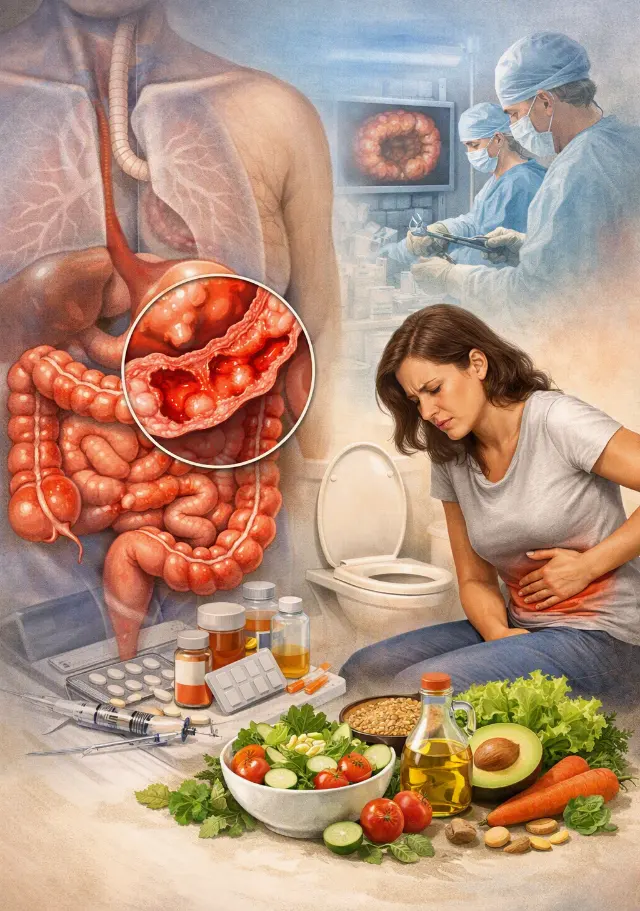
Inflammatory bowel disease (IBD) principally includes ulcerative colitis and Crohn's disease. These conditions are characterised by persistent intestinal mucosal inflammation, causing abdominal pain, sometimes bloody diarrhoea, weight loss and chronic fatigue. They often affect young people and progress through flare-ups, alternating periods of remission and acute attacks. Their impact on quality of life is considerable: permanent digestive problems, loss of energy, anxiety related to recurrence and sometimes social isolation.
Conventional medicine explains these diseases through an immune disorder: the immune system, meant to protect the body, turns against the intestinal mucosa and sustains chronic inflammation. Pro-inflammatory cytokines, genetic abnormalities and certain environmental factors (tobacco, stress, modern food) are implicated. This interpretation emphasises the immune system's self-aggression but does not fully answer the question: why does the intestine become the site of such a reaction?
From the perspective of accumulation disorders, IBD principally reflects metabolic overload. Dietary and bacterial waste saturates the mucosa, disrupts local enzymes and prevents normal tissue regeneration. The overloaded intestine loses its defence capacity and becomes the site of permanent inflammation. Cooked fats, dairy products and refined sugars impose excessive work on digestive enzymes, weaken the mucosal barrier and favour toxin penetration. The body then responds with chronic inflammation that becomes self-aggression.
This accumulation mechanism explains symptoms' persistence and severity. Diarrhoea reflects the intestine's inability to absorb water and nutrients properly. Abdominal pain reflects inflammation and spasms linked to overload. Weight loss and chronic fatigue result from prolonged malabsorption. Together, they form a disabling picture in which the intestine can no longer fulfil its essential function: digest, assimilate and protect.
Understanding IBD therefore means recognising that the intestine is a fragile organ directly exposed to modern dietary excess. When saturated with waste, it becomes the site of self-sustaining inflammation. This interpretation opens a new perspective: IBD is not merely immune disease but accumulation disease, revealing the limits of human enzymatic capacities in the face of inappropriate nutrition.
Complications and conventional medicine
IBD — ulcerative colitis and Crohn's disease — extends beyond troublesome digestive symptoms; it exposes patients to sometimes serious complications. Repeated flare-ups cause intense mucosal inflammation that can progress to deep ulcerations. These lesions weaken the intestinal wall and increase perforation risk, a formidable complication that can cause peritonitis. In Crohn's disease, transmural inflammation favours fistula formation: abnormal connections between the intestine and other organs (bladder, skin, vagina), sources of chronic infections and disabling pain. Digestive haemorrhages linked to fragile mucosal vessels can also occur and require urgent care. Finally, prolonged IBD progression increases colorectal cancer risk, requiring regular endoscopic monitoring.
Faced with these complications, conventional medicine uses a graduated therapeutic strategy. Corticosteroids control acute flare-ups; they reduce inflammation but cannot be prescribed long term because of side effects (osteoporosis, diabetes, hypertension). Immunosuppressants (azathioprine, methotrexate) aim to calm immune self-aggression but expose patients to increased infection risk. Biological therapies, such as anti-TNF agents, represent a major advance: they specifically target inflammatory mediators and allow some patients to regain acceptable quality of life. However, their high cost, side effects and absence of a definitive cure limit their reach. In severe or complicated forms, surgery becomes necessary: resection of affected intestinal segments, total colectomy in ulcerative colitis. These procedures relieve symptoms but do not prevent recurrence because metabolic accumulation persists.
Although indispensable in critical situations, this conventional approach remains essentially symptomatic. It suppresses disease's visible consequences without correcting its underlying cause. Even when stabilised by treatments, patients remain exposed to relapses and complications. Conventional medicine acknowledges that IBD comprises incurable chronic diseases requiring lifelong care. This view sustains a sense of inevitability among patients whose everyday lives are punctuated by treatments, hospitalisations and monitoring examinations.
From the accumulation-disorder perspective, these limitations are explained by the absence of correction of underlying conditions. As long as modern food continues saturating the intestinal mucosa with waste, inflammation persists despite medication. IBD then appears to reflect a profound nutritional imbalance that only dietary reform can correct durably. Conventional medicine provides an immediate response to complications, but the lasting solution lies in adopting the ancestral hypotoxic diet, which eases intestinal enzymes' work, restores the mucosal barrier and prevents recurrences.
The ancestral diet as an alternative
IBD — ulcerative colitis and Crohn's disease — is considered incurable by conventional medicine, requiring intensive treatments and lifelong monitoring. Yet clinical experience and the Family Clinic approach show that profound nutritional reform can transform its course. The ancestral hypotoxic diet constitutes a coherent alternative capable of reducing inflammation, promoting mucosal healing and sometimes inducing lasting remission.
This diet rests on three major principles:
- Exclusion of saturating foods: dairy products, cooked fats and refined sugars are eliminated. These foods impose excessive work on digestive enzymes, weaken the mucosal barrier and sustain inflammation. Avoidance immediately reduces the toxic load and allows the intestine to regenerate.
- Emphasis on hypotoxic foods: raw virgin oils (olive, rapeseed, flax), fresh fruit and vegetables, gentle cooking. These choices provide fibre, antioxidants and essential fatty acids that soothe inflammation and favour healing.
- Respect for human enzymatic capacities: meals are light and spread out, and heavy combinations avoided. The intestine regains a harmonious digestive rhythm without overload.
Clinical observations are telling: on a hypotoxic diet, diarrhoea decreases, pain lessens and flare-ups become less frequent. Some patients report a rapid improvement in energy and weight regain. In documented cases, disease entered lasting remission without intensive treatments. These results are not a miracle but a biological logic: respecting enzymatic limits allows the mucosa to regain balance and inflammation to subside.
The ancestral diet also acts preventively. By adopting this diet, patients do more than relieve symptoms; they improve digestive conditions and reduce recurrence risk. Nutrition becomes a therapeutic and educational tool, restoring patients' active role in healing. Rather than enduring IBD's inevitability, they participate in restoring their health through daily food choices.
The ancestral hypotoxic diet is therefore not a fashion, but a logical response to intestinal accumulation diseases. It illustrates nutrition's power as a therapeutic alternative and confirms that IBD, far from being inevitable, can be eased and sometimes controlled through appropriate dietary reform.
Family Clinic protocol
The Family Clinic protocol applied to IBD rests on a comprehensive nutritional and lifestyle approach aimed at reducing inflammation, healing the mucosa and preventing recurrences. The goal is not merely to calm flare-ups, but to restore lasting digestive balance and give patients independence and vitality again.
- Elimination of saturating foods. Dairy products, cooked fats and refined sugars are excluded. These foods impose excessive work on intestinal enzymes, weaken the mucosal barrier and sustain chronic inflammation. Avoidance constitutes the first step towards easing the toxic load and allowing the intestine to heal.
- Emphasis on hypotoxic foods. Raw virgin oils (olive, rapeseed, flax), fresh fruit and vegetables, gentle cooking and plant fibre are favoured. These choices provide antioxidants and essential nutrients that soothe inflammation and favour mucosal regeneration. Meals should be light, easily digested and respectful of human enzymatic capacities.
- Meal organisation. The protocol recommends moderate portions, meals spread out and avoidance of heavy combinations. Periods of digestive rest are essential: they allow the intestine to regenerate and the immune system to regain balance. Slow chewing and regular hydration complement this digestive hygiene.
- Lifestyle. Gentle physical activity (walking, stretching), stress management and rest are incorporated into the protocol. The digestive system is sensitive to nervous tension; a calmer lifestyle favours healing and reduces flare-up frequency. Hypotoxic nutrition therefore accompanies comprehensive everyday reform.
- Practical support. The protocol draws on concrete references, notably the book Cooking to Heal (2026), which offers recipes suited to the hypotoxic diet. This resource translates theoretical principles into daily actions: choose good ingredients, prepare easily digested dishes, establish a healthy eating routine. The goal is to make reform accessible and lasting.
This protocol is not limited to a list of prohibitions; it constitutes nutritional and lifestyle re-education. Patients learn to recognise foods that cause accumulation and those that regenerate them. They discover that digestion can become smooth again, diarrhoea and pain can lessen, and flare-ups can become more widely spaced. This educational approach lies at the heart of Family Clinic's philosophy: restore patients' independence and responsibility in managing their health.
The Family Clinic protocol for IBD thus goes beyond treating intestinal inflammation; it aims to restore biological coherence, prevent recurrences and offer patients lasting digestive health. It illustrates hypotoxic nutrition's power and confirms that IBD comprises diseases reversible through appropriate dietary reform.
Conclusion
Colitis and inflammatory bowel disease (IBD), such as ulcerative colitis and Crohn's disease, perfectly illustrate the logic of accumulation diseases. They reveal intestinal mucosal fragility in the face of modern dietary excess and show how metabolic overload can become disabling chronic inflammation. Abdominal pain, bloody diarrhoea, weight loss and fatigue become everyday realities for many patients whose quality of life is profoundly altered. By targeting immunity through corticosteroids, immunosuppressants or biological therapies, conventional medicine provides an indispensable symptomatic response, but does not correct the underlying cause: digestive accumulation.
The Family Clinic interpretation offers a new perspective: IBD is not merely autoimmune disease but accumulation disorders. Dietary and bacterial waste saturates the mucosa, disrupts local enzymes and sustains permanent inflammation. This understanding opens the way to a lasting solution: the ancestral hypotoxic diet, excluding dairy products, cooked fats and refined sugars while emphasising raw virgin oils, fresh fruit and vegetables and gentle cooking. By respecting human enzymatic capacities, it allows the mucosa to heal, inflammation to subside and the intestine to regain balance.
Clinical observations confirm this logic: on a hypotoxic diet, diarrhoea decreases, pain lessens, flare-ups become less frequent and sometimes disease enters lasting remission. Rather than enduring inevitability, patients regain an active role in healing through daily food choices. Nutrition thus becomes a therapeutic and preventive weapon capable of transforming IBD's course and giving hope to sufferers.
This booklet forms part of Family Clinic's philosophy: provide clear, scientific and practical guides to understanding accumulation diseases and proposing effective nutritional solutions. Far from being an irreversible sentence, IBD appears as an opportunity to reform food habits, restore harmonious digestion and regain lasting vitality. The conclusion is simple but powerful: intestinal health depends directly on food quality, and prevention is possible through accessible, coherent reform.