
Foreword
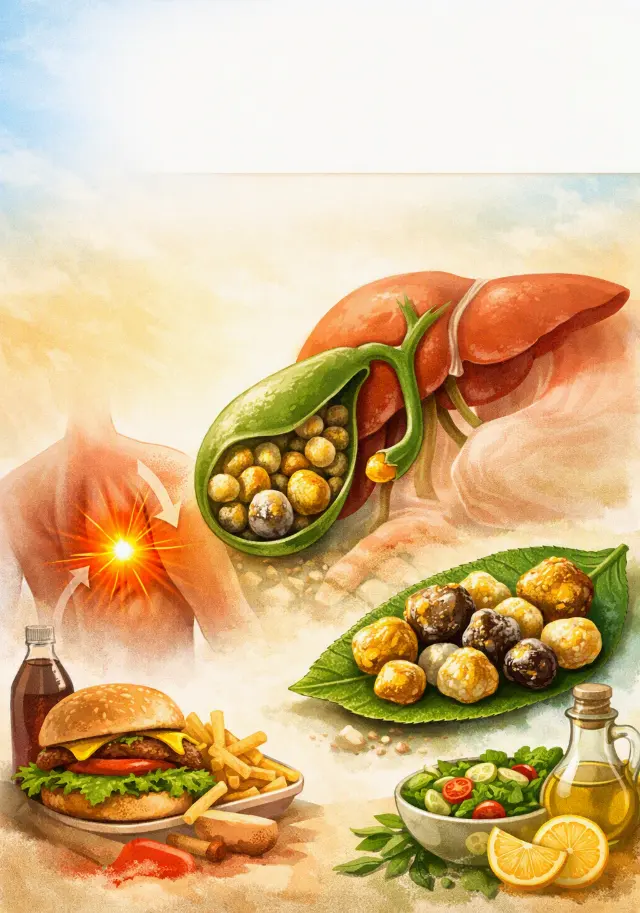
Gallstones, or stones in the gallbladder, are a common condition providing an exemplary illustration of accumulation disorders. They are characterised by formation of solid concretions in the gallbladder, consisting of cholesterol, bile salts and pigments. These stones can remain silent for a long time, but often cause intense abdominal pain called biliary colic, occurring after a fat-rich meal. Patients describe sudden pain beneath the right ribs, radiating towards the shoulder or back, sometimes accompanied by nausea and vomiting. These dramatic, disabling attacks reflect a profound imbalance in the hepatobiliary system.
Conventional medicine explains gallstones through cholesterol saturation of bile, reduced bile salts or gallbladder stasis. These biochemical mechanisms are accurate, but do not suffice to explain why saturation occurs. From the accumulation perspective, gallstones result above all from metabolic overload: cooked fats, dairy products and refined sugars saturate liver enzymes, disrupt bile fluidity and favour crystal precipitation. Unable to evacuate this waste properly, the gallbladder becomes the site of pathological accumulation. Gradually, thickened bile becomes biliary sludge, then solid stones.
Gallstone complications are serious: migration of a stone into the cystic or common bile duct, biliary obstruction, jaundice or even acute pancreatitis. In severe cases, surgery (cholecystectomy) is proposed, but does not correct the underlying cause. The liver and gallbladder are organs of filtration and elimination; their health depends directly on food quality. When food respects human enzymatic capacities, bile remains fluid, waste is evacuated and digestion proceeds without overload.
The ancestral hypotoxic diet offers a preventive and sometimes therapeutic alternative. By excluding cooked fats and dairy products, and favouring raw virgin oils, plant fibre and gentle cooking, it eases the liver's workload and makes bile more fluid. Clinical observations show that biliary colic disappears rapidly on a hypotoxic diet and new stone formation slows. Some patients have seen symptoms lessen enough to avoid surgery.
This booklet belongs to the Family Clinic collection, which aims to provide practical, scientific and educational guides to understanding accumulation diseases and proposing effective nutritional solutions. Gallstones thus become an educational model: they remind us that liver and gallbladder health depends directly on food quality, and that returning to nutrition respectful of human enzymatic capacities prevents stone formation and restores harmonious biliary function.
Understanding gallstones
Gallstones, or stones in the gallbladder, are a common condition perfectly illustrating accumulation disorders. They are characterised by formation of solid concretions in the gallbladder, composed of cholesterol, bile salts and pigments. These stones can remain silent for a long time, but often cause intense abdominal pain called biliary colic, occurring after a fat-rich meal. Patients describe sudden pain beneath the right ribs, radiating towards the shoulder or back, sometimes accompanied by nausea and vomiting. These often dramatic attacks reflect a profound imbalance in the hepatobiliary system.
Conventional medicine explains gallstones through cholesterol saturation of bile, reduced bile salts or gallbladder stasis. These mechanisms are biochemically accurate, but do not suffice to explain why saturation occurs. From the accumulation perspective, gallstones result above all from metabolic overload: cooked fats, dairy products and refined sugars saturate liver enzymes, disrupt bile fluidity and favour crystal precipitation. The liver, a filtration organ, and the gallbladder, a bile reservoir, become unable to evacuate lipid waste properly. Gradually, thickened bile becomes biliary sludge, then solid stones.
This hepatobiliary accumulation process is insidious: it develops slowly, often without symptoms initially. The overloaded gallbladder loses its ability to contract effectively. Bile stagnates and thickens, and crystals clump together. This phenomenon resembles a clogged filter: when cooked fats and refined sugars accumulate, the elimination system becomes blocked. The body attempts to compensate, but enzymatic overload eventually causes local inflammation and acute pain. Biliary colic then becomes a warning signal from a saturated liver.
Gallstones thus illustrate accumulation diseases' logic: they are not inevitable, but directly result from nutrition unsuited to human enzymatic capacities. By transforming into complex molecules, cooked fats become difficult to break down; dairy products thicken bile; refined sugars disrupt liver metabolism. Together, these create conditions favourable to waste precipitation and stone formation.
Understanding gallstones therefore means recognising that the liver and gallbladder are not only digestive organs, but organs of filtration and elimination. Their health depends directly on food quality. When food respects human enzymatic capacities, bile remains fluid, waste is evacuated and digestion proceeds without overload. Gallstones then become an educational model: they show how an apparently mechanical disorder actually reflects profound nutritional imbalance.
Complications and conventional medicine
Although gallstones can remain silent for a long time, they expose patients to sometimes serious complications. When stones migrate, they cause mechanical obstruction disrupting normal bile flow. The immediate consequence is biliary colic, sudden intense pain generally occurring after a fat-rich meal. Located beneath the right ribs, this pain may radiate towards the shoulder or back and be accompanied by nausea and vomiting. It reflects the gallbladder's effort to expel a stone lodged in the cystic duct.
When obstruction persists or worsens, complications become more serious. Migration of a stone into the common bile duct can cause complete biliary obstruction, producing jaundice with yellow skin and eyes, dark urine and pale stools. In some cases, biliary obstruction is accompanied by an ascending infection called cholangitis, which can be life-threatening. More seriously still, stone migration can trigger acute pancreatitis, severe pancreatic inflammation, often painful and potentially fatal. These complications show that gallstones are not a benign condition: they can progress to critical situations requiring urgent care.
Faced with these risks, conventional medicine proposes several strategies. In symptomatic or complicated cases, the standard treatment is cholecystectomy, surgical removal of the gallbladder. Performed laparoscopically, this procedure removes the stone reservoir and prevents recurrence. It effectively avoids serious complications, but does not correct the underlying cause: metabolic overload and hepatobiliary accumulation. Furthermore, some operated patients continue experiencing digestive problems because the liver remains saturated and bile thickened.
In less severe forms, conventional medicine sometimes proposes drug treatments aimed at dissolving stones with bile acids. These approaches are lengthy, costly and rarely definitive, because stones recur if food remains unchanged. Low-fat diets are also advised, but do not distinguish between saturating cooked fats and raw virgin oils beneficial to bile fluidity. Conventional care thus remains essentially symptomatic: it removes consequences without addressing the cause.
This chapter highlights conventional medicine's limitations. Surgery and drug treatments can save lives in severe cases, but do not prevent new stone formation if lifestyle and food are not corrected. Gallstones must therefore be understood as an accumulation disease: only profound nutritional reform restores bile fluidity and prevents recurrence. Conventional medicine provides an immediate response to complications, but the lasting solution lies in adopting the ancestral hypotoxic diet, which eases liver work and protects the gallbladder.
The ancestral diet as an alternative
As an accumulation disorder, gallstones cannot be durably corrected through symptomatic approaches alone. Dissolving drugs or surgery certainly relieve, but do not address the underlying cause: lipid and enzymatic overload thickening bile and favouring stone formation. In this context, the ancestral hypotoxic diet appears as a coherent, preventive and sometimes therapeutic alternative.
This diet rests on a simple principle: ease the liver and gallbladder's workload by eliminating saturating foods. By transforming into complex molecules, cooked fats become difficult to break down and thicken bile. Industrial dairy products, often poorly tolerated, increase enzymatic overload. Refined sugars disrupt liver metabolism and favour crystal precipitation. Excluding them constitutes the first step towards restored bile fluidity.
In their place, the ancestral diet emphasises raw virgin oils (olive, rapeseed, flax), which provide essential fatty acids without overload. Plant fibre from fresh fruit and vegetables stimulates bowel transit and promotes waste elimination. Gentle cooking preserves foods' vitality and avoids toxic molecule formation. Respectful of human enzymatic capacities, this diet allows the liver to filter effectively and the gallbladder to maintain fluid bile.
Clinical observations confirm this approach's effectiveness. Many patients report rapid disappearance of biliary colic, improved digestion and renewed energy. In some cases, new stone formation slows and surgery can be avoided. These results are not chance, but a biological logic: respecting enzymatic limits allows the hepatobiliary system to regain balance.
The ancestral diet also acts preventively. By adopting this diet, patients do more than relieve symptoms; they improve digestive conditions and reduce recurrence risk. Gallstones cease to be a chronic threat and become a transient episode corrected by dietary reform. This approach restores patients' active role: they no longer simply endure disease, but participate in healing through nutritional choices.
The ancestral hypotoxic diet is therefore not a fashion, but a logical response to hepatobiliary accumulation. It illustrates nutrition's power as a therapeutic and preventive tool. Gallstones then become an educational model: they show that liver and gallbladder health depends directly on food quality and that prevention is possible through simple, accessible reform.
Family Clinic protocol
Gallstone care within the Family Clinic protocol rests on a comprehensive nutritional and lifestyle approach aimed at relieving symptoms, preventing complications and restoring bile fluidity. The goal is not merely to avoid painful attacks, but to correct the underlying cause: lipid and enzymatic overload favouring stone formation.
The protocol is organised around several complementary areas:
- Elimination of saturating foods. Cooked fats, dairy products and refined sugars are excluded because they thicken bile and saturate liver enzymes. Avoidance is the first step towards easing liver and gallbladder work.
- Emphasis on hypotoxic foods. Raw virgin oils (olive, rapeseed, flax), fresh fruit and vegetables, plant fibre and gentle cooking are favoured. These choices respect human enzymatic capacities and promote fluid bile, reducing crystal precipitation risk.
- Meal organisation. Portions should be moderate, meals spread out and heavy combinations avoided. Periods of digestive rest are advised to allow effective liver filtration and proper gallbladder emptying.
- Digestive hygiene and lifestyle. Slow chewing, regular hydration and gentle physical activity (walking, stretching) stimulate bowel transit and promote waste elimination. Rest and stress management complement this approach, because the hepatobiliary system is sensitive to nervous tension.
This protocol is not limited to a list of prohibitions; it constitutes nutritional re-education. Patients learn to recognise foods that cause accumulation and those that regenerate them. They discover that digestion can become light and harmonious again, biliary colic can disappear and new stone formation can slow. This educational approach lies at the heart of Family Clinic's philosophy: restore patients' independence and responsibility in managing their health.
The protocol also draws on practical references, notably the book Cooking to Heal (2026), offering recipes suited to the hypotoxic diet. This resource translates theoretical principles into daily actions: choose good ingredients, prepare easily digested dishes, establish a healthy eating routine. The goal is to make reform accessible and lasting by incorporating it into daily life.
The Family Clinic protocol for gallstones thus goes beyond treating biliary discomfort; it aims to restore biological coherence, prevent recurrences and offer patients lasting hepatobiliary health. It illustrates hypotoxic nutrition's power and confirms that gallstones are reversible through appropriate dietary reform.
Conclusion
Gallstones provide an exemplary illustration of accumulation diseases' logic: lipid overload, enzymatic saturation, waste precipitation. They remind us that the liver and gallbladder are not only digestive organs, but essential filters responsible for eliminating excess and maintaining bile fluidity. When modern food imposes cooked fats, dairy products and refined sugars, these organs are overwhelmed and bile thickens until stones form. Biliary colic then becomes a warning signal from a saturated system.
Through surgery or drug treatments, conventional medicine provides an immediate response to complications, but does not correct the underlying cause. Operated patients remain exposed to metabolic imbalances if food remains inappropriate. This is why hypotoxic nutrition, inspired by the ancestral diet, represents a coherent, lasting alternative. By excluding cooked fats and saturating products, and favouring raw virgin oils, plant fibre and gentle cooking, it eases liver work, makes bile more fluid and prevents new stone formation.
Clinical observations confirm that this dietary reform can transform disease trajectory: disappearance of biliary colic, improved digestion, renewed energy, sometimes even avoidance of surgery. Gallstones then cease to be a chronic threat and become a transient episode corrected by appropriate nutritional reform. They become an educational model demonstrating that hepatobiliary health depends directly on food quality and prevention is possible through simple, accessible choices.
This booklet forms part of Family Clinic's philosophy: provide practical, scientific and educational guides to understanding accumulation diseases and proposing effective nutritional solutions. Far from being inevitable, gallstones appear as an opportunity to regain harmonious biliary function, smooth digestion and lasting vitality. They remind us that health is not simply the absence of disease, but balance between the body and its dietary environment.