
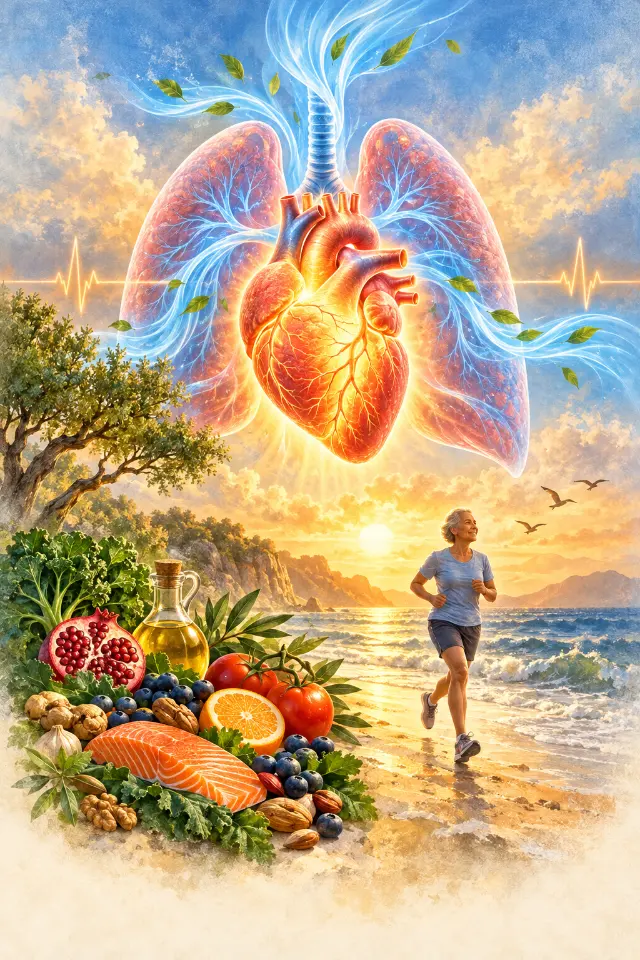
When people talk about aging, many immediately think of wrinkles, gray hair or joint pain. Yet longevity specialists are often interested in another, much more important indicator: cardiorespiratory capacity.
Behind this somewhat technical expression lies a very simple reality. To stay alive, every cell in our body needs oxygen and nutrients. The role of the cardiovascular system is precisely to carry these essential elements to the muscles, the brain, the kidneys, the liver and all the other organs.
The heart acts as an extraordinarily efficient pump. Day and night, without interruption, it pushes blood through several tens of thousands of kilometers of blood vessels. Even while we sleep, it tirelessly carries on its work.
The lungs, for their part, provide the gas exchange needed for survival. With each breath, they allow oxygen to enter the blood and carbon dioxide to be eliminated.
When the heart and lungs work efficiently, the whole body benefits. When their performance declines, all the body’s functions end up being affected. This is why doctors often regard cardiorespiratory fitness as one of the best indicators of overall health.
A person who can walk briskly, climb several flights of stairs or make a moderate effort without excessive breathlessness generally has a valuable functional reserve for the future. Conversely, breathlessness that comes on with increasingly light efforts is often a warning sign that deserves particular attention.
With age, certain physiological changes naturally appear.
- The heart muscle gradually loses part of its ability to adapt.
- The arteries sometimes become stiffer.
- Lung capacity tends to decrease.
- The respiratory muscles may lose some of their power.
These changes are normal, but the speed at which they progress varies considerably from one person to another. Some people aged seventy-five show remarkable cardiovascular fitness, while others already face significant difficulties at fifty-five. This difference is largely influenced by lifestyle.
Movement is the main stimulus for the cardiovascular system. Every time we walk, cycle, swim or make a physical effort, the heart must adapt to a greater demand for oxygen.
- It responds by increasing its output.
- The blood vessels dilate.
- Circulation improves.
- The lungs speed up oxygen exchange.
Gradually, the body develops greater capacities. This adaptation is comparable to the regular maintenance of an engine. A car that sits unused for years often ends up deteriorating faster than a vehicle that is used and carefully maintained.
The human body follows a similar logic. Movement prompts it to preserve its capacities. Inactivity, on the contrary, sends it the opposite message. The consequences of a sedentary lifestyle are not always immediately visible. They often set in quietly.
- A few kilograms appear.
- Endurance decreases slightly.
- Stairs become harder to climb.
- Breathlessness comes on more quickly.
Then these small limitations end up affecting daily life.
- Some people gradually reduce how much they get around.
- They avoid going for walks.
- They give up certain activities.
This reduction in activity then leads to a further loss of physical fitness. A genuine vicious circle can set in.
Conversely, people who stay regularly active maintain a virtuous circle.
- Their heart stays better trained.
- Their muscles make better use of oxygen.
- Their recovery remains faster.
- Their functional capacities are better preserved.
Improved blood circulation also offers a considerable advantage for the brain. The brain accounts for only about 2% of body weight, but it consumes a large share of the available oxygen. Good circulation therefore contributes directly to its optimal functioning.
Many specialists now consider that what is good for the heart is generally good for the brain. This relationship explains why habits that favor cardiovascular health are also associated with better preservation of cognitive function during aging.
Maintaining good cardiorespiratory fitness also influences independence.
- Being able to walk several hundred meters without excessive fatigue.
- Being able to carry your groceries.
- Being able to get up easily from a chair.
- Being able to travel and enjoy everyday activities.
All these abilities depend partly on how well the cardiovascular system functions.
Older people often fear the loss of independence above all. Yet this independence rests largely on the ability of the heart, lungs and muscles to work together efficiently. Fortunately, it is never too late to improve your physical condition.
Even after several years of inactivity, the body retains a remarkable capacity to adapt. A daily walk of twenty to thirty minutes can already produce significant changes. Over time, this walk can be lengthened or made slightly more intense according to each person’s abilities.
The goal is not athletic performance. The goal is to build a reserve of health.
This reserve will make it easier to cope with illness, physical stress, possible surgery and the natural challenges of aging.
Longevity specialists often point out that there are two ages: the age written on your identity card and your biological age. The first is set by the calendar. The second depends partly on the actual condition of our organs.
Preserving your heart and lungs is probably one of the best ways to keep your biological age as young as possible. For a trained heart, flexible blood vessels and good breathing capacity are much more than a simple matter of physical performance. They are the very foundations of vitality, independence and quality of life.
Family Clinic advice
Ask yourself regularly: “Can I climb two flights of stairs without stopping? Can I walk briskly for thirty minutes without difficulty?”
The answer to these simple questions often tells you more about your future health than many numbers or tests. Preserving your ability to walk, breathe and move freely is one of the best investments for aging in good health.