
Foreword
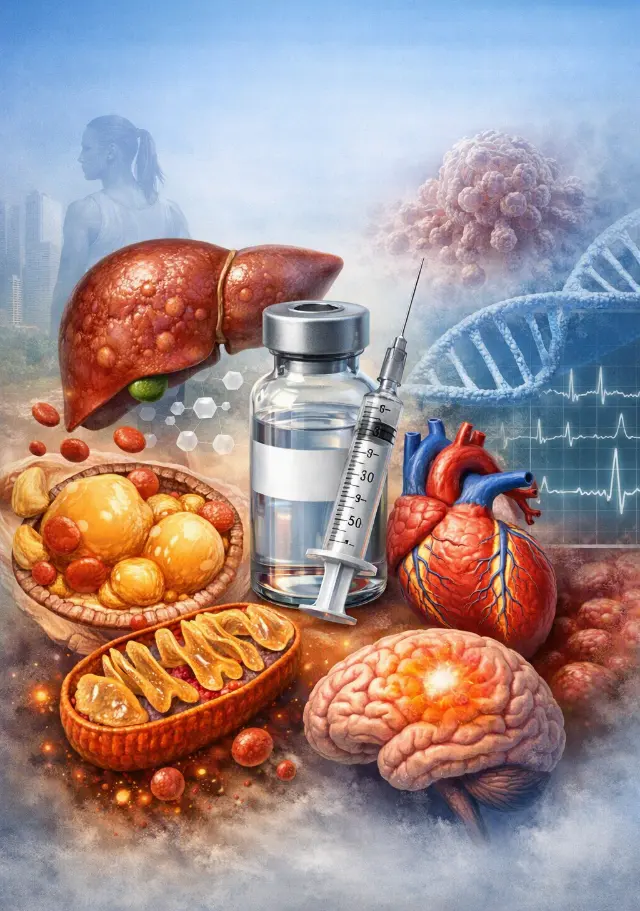
Insulin is an essential hormone, but it becomes the villain when it is produced in excess. The document you shared stresses this point: hyperinsulinemia lies at the heart of metabolic syndrome and modern chronic diseases. Type 2 diabetes, hypertension, dyslipidemia, cardiovascular disease, cancer, dementia, fatty liver disease and polycystic ovary syndrome are all linked to insulin levels that are too high.
For a long time, insulin was believed to have only one function: getting glucose into cells. In reality, its role is much broader: it deposits glucose and fatty acids in the tissues, favoring energy storage over burning. When the mitochondria, the cells’ true power plants, are saturated, insulin diverts the substrates toward the liver and adipose tissue. The result: fat accumulation, inflammation and metabolic dysfunction.
The text emphasizes that when the mitochondria are overloaded, they send out distress signals (mitochondrial DNA, extracellular ATP) that trigger an inflammatory response. This chronic inflammation is the foundation of degenerative diseases. Insulin then becomes the marker of an overloaded body: the higher it rises, the more it means that the mitochondria are unable to burn energy properly.
Three fat deposits are distinguished:
- Subcutaneous fat: relatively tolerable up to about 10 kg of extra weight, it remains the first reservoir in cases of insulin sensitivity.
- Visceral fat: strongly influenced by cortisol (stress, depression), it is much more inflammatory because it drains directly to the liver.
- Liver fat: the most dangerous, generated by sugar, alcohol and poor-quality proteins (excess BCAAs). A few hundred grams are enough to cause metabolic chaos.
The document also points out that cellular regulation rests on three key enzymes: PI3 kinase, AMPK and mTOR. Their synchronization determines whether a cell is in growth mode or burning mode. When this orchestration is disrupted by an ultra-processed diet and an oxidative environment, chronic diseases appear.
Insulin is thus not only a storage hormone: it is the signal of an overwhelmed metabolism. Correcting it means restoring mitochondrial function, reducing the intake of sugars and ultra-processed foods, and reintroducing periods of metabolic rest such as fasting.
The basics of insulin metabolism
Insulin is a hormone produced by the beta cells of the pancreas. It acts on almost every tissue in the body, but its role goes far beyond simply regulating blood glucose. It is above all an energy storage hormone: it deposits glucose and fatty acids in cells, promoting their conversion into glycogen or triglycerides. This mechanism, vital in an environment where food was scarce, becomes problematic in the modern context of food abundance.
Insulin and the mitochondria
The mitochondria are the cells’ power plants. They convert glucose into ATP, the fuel indispensable to life. But they can only process a limited amount of substrates at a time. When the intake is too high, insulin diverts the surplus to storage, preventing complete burning. The result: fat accumulation and mitochondrial dysfunction. Overloaded mitochondria send out distress signals (mitochondrial DNA, extracellular ATP), triggering chronic inflammation.
Insulin and its target tissues
- Liver: insulin promotes the conversion of glucose into glycogen, but also into fat (lipogenesis). An excess leads to fatty liver disease.
- Adipose tissue: insulin activates the GLUT4 transporter for glucose and the enzyme lipoprotein lipase for fatty acids. Both are converted into triglycerides, increasing the size of fat cells.
- Muscle: insulin is not indispensable for glucose to enter, but it is essential for the uptake of amino acids and for muscle growth.
- Brain: glucose enters without insulin, but insulin receptors play a role in regulating appetite and satiety.
Fat deposits
The body has three main reservoirs:
- Subcutaneous fat: relatively tolerable, it can store up to 10 kg of extra weight before becoming a problem.
- Visceral fat: influenced by cortisol (stress), it is much more inflammatory because it drains directly to the liver.
- Liver fat: the most dangerous, generated by sugar, alcohol and poor-quality proteins. A few hundred grams are enough to cause metabolic chaos.
Growth vs. burning
Every cell alternates between two states: growth and burning. Three key enzymes orchestrate this choice:
- PI3 kinase: promotes glucose entry and growth.
- AMPK: acts as an energy gauge, triggering burning when ATP falls.
- mTOR: regulates cell division and protein synthesis.
When these enzymes are synchronized, metabolism stays balanced. But an ultra-processed diet and excess insulin disrupt this orchestration, leading to chronic diseases.
5. Insulin and metabolic diseases
Hyperinsulinemia is associated with eight major diseases: type 2 diabetes, hypertension, dyslipidemia, cardiovascular disease, cancer, dementia, fatty liver disease and polycystic ovary syndrome. In each one, insulin acts as an alarm signal: it reveals that the mitochondria are overwhelmed and that energy is being diverted to storage.
In short, insulin is a vital but double-edged hormone. It protects cells when there is an energy surplus, but its chronic elevation becomes the driving force of modern diseases. Understanding its mechanisms is the first step toward restoring a healthy metabolism: reducing the intake of sugars and ultra-processed foods, limiting stress, and reintroducing periods of metabolic rest such as fasting.
Insulin and chronic inflammation
Hyperinsulinemia is not merely a problem of energy storage: it triggers and sustains chronic inflammation, the true foundation of modern diseases. This inflammation is the direct consequence of mitochondrial overload and the accumulation of pathological fat in the liver and adipose tissue.
Mitochondria in distress
When the mitochondria are saturated by an excess of substrates (glucose, fructose, fatty acids), they become dysfunctional. They then release distress signals: mitochondrial DNA and extracellular ATP. The body perceives these molecules as danger markers, which trigger an immune response. The body recruits macrophages to “clean up” the damaged cells, but this process is accompanied by the release of inflammatory cytokines (TNF‑α, IL‑6).
2. Expansion and death of fat cells
Under the effect of insulin, fat cells grow larger by accumulating glucose and fatty acids, which are converted into triglycerides. But each cell has a limit: beyond a certain volume, the protective membrane (perilipin) ruptures, releasing the fat into the cytoplasm. The fat cell dies, and macrophages flood in to clear away the debris. This “cleanup” generates an inflammatory cascade that spreads into the bloodstream.
Different fat deposits and their inflammatory impact
- Subcutaneous fat: relatively tolerable, it can expand by up to ≈ 10 kg of extra weight before causing systemic inflammation.
- Visceral fat: much more dangerous, because it drains directly to the liver via the portal vein. The cytokines released there reach concentrations 24 times higher than those coming from subcutaneous tissue. Stress and cortisol are the main drivers of this accumulation.
- Liver fat: the most toxic. A few hundred grams are enough to trigger fatty liver disease and major liver inflammation. It is generated by sugar, alcohol and poor-quality proteins (excess BCAAs).
Inflammation and chronic diseases
This chronic inflammation is the common thread running through many diseases:
- Type 2 diabetes: cytokines disrupt insulin signaling, worsening resistance.
- Cardiovascular disease: endothelial inflammation promotes atherosclerosis.
- Cancer: inflammatory signals and energy dysregulation create fertile ground for cell proliferation.
- Dementia: systemic inflammation reaches the brain, disrupting neuronal function.
- PCOS: hyperinsulinemia and inflammation disrupt ovarian function.
The vicious circle
Excess calories, hyperinsulinemia and stress create a vicious circle:
- Too much energy = mitochondrial overload.
- Overload = distress signals = inflammation.
- Inflammation = insulin resistance.
- Resistance = even higher insulin.
- High insulin = more storage = new overloads.
This self-perpetuating cycle explains why metabolic diseases progress even without any apparent increase in food intake.
In short, high insulin is the driving force of a chronic inflammation that links the major modern diseases together. The key is to lower insulin: limit sugars and ultra-processed foods, manage stress, and reintroduce periods of metabolic rest. Restoring mitochondrial function means breaking the vicious circle and preventing progression to diabetes, cardiovascular disease and degenerative diseases.
Insulin and fat deposits
Insulin is the hormone that determines where surplus energy will be stored. Depending on the metabolic and hormonal context, it directs glucose and fatty acids to different fat deposits. Understanding these deposits is essential to grasp why some forms of obesity are more dangerous than others.
Subcutaneous fat
This is the most visible reservoir: the fat located under the skin, particularly on the thighs and buttocks. Insulin promotes its expansion by activating the GLUT4 transporter (for glucose) and the enzyme lipoprotein lipase (for fatty acids). Triglycerides accumulate in the fat cells, which swell like balloons.
- Relative tolerance: subcutaneous fat can expand by up to about 10 kg of extra weight without causing major metabolic disorder.
- Biological limit: beyond that, the fat cells die, releasing fat into the cytoplasm and triggering inflammation.
- Protective role: in insulin-sensitive individuals, this deposit acts as a buffer, delaying the onset of complications.
Visceral fat
Located around the abdominal organs, it is much more dangerous. Unlike subcutaneous fat, it drains directly to the liver through the portal vein.
- Influence of cortisol: stress and depression promote its accumulation, independently of diet. This is why some people lose weight overall but see their belly grow.
- Amplified inflammation: the cytokines released by visceral fat cells reach the liver and the brain at concentrations 24 times higher than those coming from subcutaneous tissue.
- Consequences: insulin resistance, fatty liver disease, increased cardiovascular risk.
Liver fat
The liver is the most sensitive and most dangerous deposit. A few hundred grams are enough to cause fatty liver disease and major metabolic disturbances.
- Origin: sugar, fructose, alcohol and poor-quality proteins (excess BCAAs).
- Mechanism: insulin promotes lipogenesis in the liver, converting glucose into fat.
- Impact: local inflammation, impaired liver function, progression to NASH (nonalcoholic steatohepatitis).
The role of insulin in fat distribution
Insulin acts as a conductor:
- When there is insulin sensitivity, energy is directed to subcutaneous fat.
- When there is stress or insulin resistance, it goes to visceral fat.
- When ultra-processed foods are consumed, it favors liver fat.
Each deposit has its own consequences: subcutaneous fat is relatively benign, visceral fat is inflammatory, and liver fat is toxic.
Clinical consequences
- Subcutaneous obesity: often visible but less dangerous.
- Abdominal obesity: associated with metabolic syndrome and cardiovascular risk.
- Fatty liver disease: silent but destructive, and can progress to cirrhosis and liver cancer.
In short, insulin determines where energy is stored. Subcutaneous fat acts as a buffer, visceral fat is inflammatory, and liver fat is toxic. Understanding these deposits makes it possible to better target the prevention and treatment of metabolic diseases.
Insulin, growth and cancer
Insulin is not only a storage hormone: it is also a cell growth signal. In excess, it promotes the proliferation and survival of cells that should not be multiplying, creating fertile ground for the development of cancers and the progression of degenerative diseases.
Growth vs. burning
Every cell alternates between two states:
- Growth: making proteins, cell division, tissue expansion.
- Burning: using glucose to produce energy (ATP).
Three enzymes orchestrate this choice:
- PI3 kinase: opens the glucose “tap,” promoting growth.
- AMPK: acts as an energy gauge, triggering burning when ATP falls.
- mTOR: regulates cell division and protein synthesis.
When these enzymes are synchronized, metabolism stays balanced. But excess insulin throws this orchestration off, pushing cells toward uncontrolled growth.
Insulin and cancer
Cancer cells are particularly good at exploiting insulin and glucose.
- Defective mitochondria: tumor cells ferment glucose instead of burning it, which requires massive supplies.
- Overactive PI3 kinase: it allows cancer cells to absorb glucose independently of insulin, strengthening their survival.
- High insulin: it stimulates lipogenesis and protein synthesis, supplying tumor cells with the building blocks they need to grow.
Hyperinsulinemia thus creates an environment that favors cancer proliferation.
Insulin and other growth disorders
- Polycystic ovary syndrome (PCOS): insulin stimulates the production of androgens, disrupting ovarian function.
- Tissue hypertrophy: excess insulin promotes the growth of abnormal tissue, worsening certain autoimmune diseases.
- Cellular aging: by keeping cells in growth mode, insulin accelerates wear and senescence.
The vicious circle of insulin
- Excess sugars and ultra-processed foods = high insulin.
- High insulin = storage and stimulation of growth.
- Excessive growth = cellular dysregulation.
- Dysregulation = inflammation and cancer risk.
This cycle explains why hyperinsulinemia is associated with a higher incidence of breast, colon, liver and pancreatic cancers.
Prevention strategies
- Reducing sugars and ultra-processed foods: limit lipogenesis in the liver.
- Intermittent or prolonged fasting: reintroduce phases of burning and autophagy.
- Physical activity: stimulate AMPK and promote energy burning.
- Stress management: lower cortisol, which amplifies the effect of insulin on visceral fat.
In short, insulin is a double-edged hormone: indispensable to survival, but dangerous when it stays permanently high. It pushes cells toward growth at the expense of burning, creating fertile ground for cancer and chronic diseases. The key is to restore balance: lower insulin, promote burning and reintroduce periods of metabolic rest.
General conclusion
Insulin is a vital hormone, but its chronic excess makes it the central driving force of modern metabolic diseases. The path through this booklet has shown that hyperinsulinemia is not merely a blood sugar imbalance: it lies at the heart of a complex network involving the mitochondria, inflammation, fat deposits and cell growth.
Insulin, a double-edged hormone
- Physiological function: it allows glucose and fatty acids to be stored, ensuring survival in times of abundance.
- Pathological drift: in the modern context of continuous, ultra-processed eating, it stays permanently high, diverting energy to storage and preventing mitochondrial burning.
The metabolic consequences
- Overloaded mitochondria: unable to burn the excess substrates, they send out distress signals, triggering inflammation and cellular dysfunction.
- Chronic inflammation: TNF‑α, IL‑6 and other cytokines circulate, disrupting insulin signaling and worsening resistance.
- Pathological fat deposits:
- Subcutaneous: relatively tolerable, but limited.
- Visceral: inflammatory, amplified by cortisol and stress.
- Liver: toxic, generated by sugar, alcohol and poor-quality proteins.
- Dysregulated cell growth: insulin pushes cells toward proliferation, creating fertile ground for cancer and accelerated aging.
Associated diseases
Type 2 diabetes, hypertension, dyslipidemia, cardiovascular disease, fatty liver disease, cancer, dementia and PCOS are all connected by the common thread of hyperinsulinemia. Insulin becomes the alarm signal of an overwhelmed body.
Strategies for correction
Lowering insulin rests on four pillars:
- Natural diet: limit sugars and ultra-processed foods, favor unprocessed foods.
- Intermittent and prolonged fasting: reintroduce phases of metabolic rest and autophagy.
- Regular physical activity: stimulate energy burning and improve insulin sensitivity.
- Stress management and sleep: lower cortisol, a major factor in visceral fat.
These simple measures make it possible to restore mitochondrial function, break the vicious circle of storage and inflammation, and prevent progression to chronic diseases.
Final message
Insulin is not the enemy: it is an indispensable hormone. But in the modern context, it has become the telltale sign of an unbalanced lifestyle. The key is not to eliminate it but to put it back in its rightful place: a hormone that is activated briefly at mealtimes and then lowered so the body can burn its reserves and regenerate. Understanding and mastering insulin means taking back control of one’s metabolism. It means preventing diabetes, cardiovascular disease, cancers and neurodegenerative disorders. It means giving the body back its natural capacity for adaptation and longevity.