
Foreword
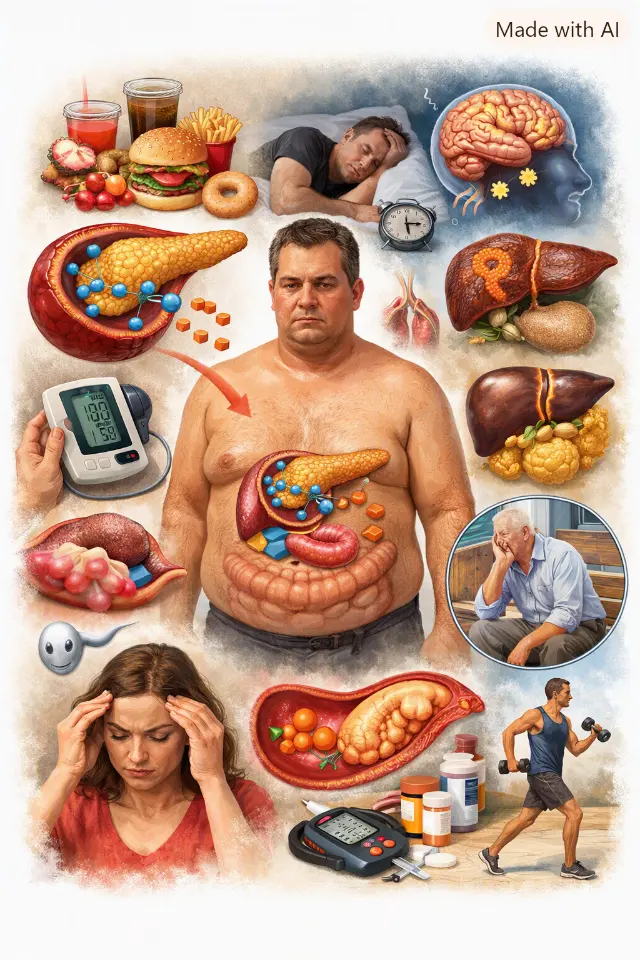
Insulin resistance is now considered one of the most underestimated public health problems. It acts like an invisible trunk whose branches take the form of various chronic diseases: high blood pressure, migraines, infertility, cognitive decline, obesity, type 2 diabetes. This hormonal disorder is the common foundation of most modern ailments.
In our food culture dominated by sugars and refined starches, insulin is constantly called upon. Every carbohydrate-rich food intake triggers a hormonal secretion which, repeated dozens of times a day, ends up saturating the tissues. Too much signal kills the signal: cells become resistant to the action of insulin. Glucose then remains in the blood, forcing the pancreas to produce ever more insulin. This vicious circle is the very definition of insulin resistance.
This booklet offers a clear, educational account of this phenomenon. It explains why insulin resistance is the common denominator of so many chronic diseases, how it develops and, above all, how it can be reversed through simple but radical lifestyle changes. Contrary to the common belief that only people with diabetes need to worry about insulin, the reality is that every one of us is concerned. Most adults already show signs of metabolic disorder, often masked by blood glucose tests that are still “normal.”
The aim of this booklet is twofold:
- To inform about the biological mechanisms of insulin resistance and its clinical consequences.
- To encourage the adoption of the four pillars of reversal: control carbohydrates, favor protein, do not fear fat, and keep to eating rhythms that allow insulin to come back down.
By following this approach, it is possible not only to prevent but also to reverse diseases considered irreversible. Far from being inevitable, insulin resistance is a warning that the body sends us. By understanding and treating it, we can regain optimal metabolic health and reduce the risk of chronic disease.
Understanding insulin and glucose
Insulin and glucose are two fundamental players in human metabolism. Too often confused, they must be distinguished in order to understand how insulin resistance arises. Insulin is a peptide hormone produced by the beta cells of the pancreas. It acts as a messenger and a regulator, allowing glucose – the energy nutrient derived from the digestion of carbohydrates – to enter muscle and fat cells. Without insulin, glucose stays in the blood, which can quickly become toxic.
When a person eats carbohydrates, they are digested and converted into glucose. Blood glucose rises, which stimulates the pancreas to secrete insulin. The hormone then acts like a doorman: it knocks on the door of the cells, opens the way and lets glucose in. In a healthy body, this mechanism is fast and efficient. Blood glucose returns to normal in about two hours, and insulin gradually comes back down.
However, in our modern environment, marked by near-constant consumption of sugars and refined starches, insulin is called upon excessively. Every meal, every snack, every sugary drink triggers a new secretion. The body thus spends most of the day in a state of hyperinsulinemia. Too much signal ends up saturating the receptors: cells become “deaf” to the action of insulin. Glucose stays in the blood longer, and the pancreas must produce even more insulin to obtain the same effect. This is the vicious circle of insulin resistance.
This phenomenon is insidious because it can develop even while blood glucose remains “normal” on standard tests. Glucose may seem under control, but at the cost of ever-higher insulin. That is why relying solely on blood glucose or HbA1c is not enough to assess metabolic health. Insulin should be considered the main marker, glucose being only a secondary symptom.
The consequences of this distinction are major. A person can have normal blood glucose while already being insulin resistant. In this case, other indicators appear: high blood pressure, reduced heart rate variability, sleep disorders, unexplained weight gain. These early signals reveal that insulin is waging a “silent war” to keep glucose within normal limits, but at the cost of an overall disruption of metabolism.
Understanding insulin and glucose therefore means understanding that metabolic balance cannot be reduced to blood glucose. Insulin is the conductor of energy regulation. When it is overworked, the whole body suffers: the cardiovascular system, the nervous system, fertility, cognition. Insulin resistance is therefore much more than a sugar problem: it is a deep hormonal disturbance that sets the stage for most modern chronic diseases.
The main causes
Insulin resistance does not appear by chance. It is the result of a set of eating behaviors and lifestyle habits which, combined, saturate the metabolic system. Understanding its causes is essential in order to act effectively.
The high-carbohydrate culture
Our modern environment is dominated by refined carbohydrates: white bread, pasta, rice, cookies, sugary drinks, industrial breakfast cereals. These foods are everywhere and are often eaten several times a day. Every carbohydrate-rich food intake triggers insulin secretion. When this stimulation is repeated over and over, the body spends most of the day in a state of hyperinsulinemia. Too much signal ends up saturating the cell receptors: tissues become resistant to the action of insulin.
2. Chronic excess insulin
Unlike protein or fat, which raise insulin little or not at all, carbohydrates trigger an intense hormonal response. In a healthy body, insulin comes back down after a few hours. But in a culture where the day starts with sugary cereal, where people snack at 10 a.m., have lunch at noon, have another snack at 4 p.m., then dessert in the evening, insulin never comes back down. The body lives permanently in a state of heightened signaling, which ends up producing hormonal “deafness.”
Sugar addiction
Many industrial foods are designed to stimulate the brain’s reward circuits. Sugar acts like a drug: it triggers a release of dopamine that sustains dependence. In this context, the rule of “moderation” does not work. A person who is dependent cannot settle for a small amount. They are driven to consume more, which sustains hyperinsulinemia and accelerates insulin resistance.
Disturbances of sleep and the nervous system
High insulin activates the sympathetic nervous system, which is responsible for the state of alert. This reduces heart rate variability (HRV), raises blood pressure and disrupts sleep. A person who eats carbohydrates in the evening may see their blood glucose stay high all night, which prevents the autonomic nervous system from taking over and promoting recovery. Sleep becomes fragmented, anxiety increases, and the metabolic vicious circle worsens.
A sedentary lifestyle
Physical activity plays a major role in insulin sensitivity. Muscles are the main consumers of glucose. When they are used, they become more sensitive to insulin and make it easier for glucose to enter. Conversely, a sedentary lifestyle reduces this capacity, worsening hyperglycemia and hyperinsulinemia.
Excess calories
Even in the absence of sugars, a diet too rich in calories can promote insulin resistance. As fat cells grow larger, they secrete inflammatory substances that disrupt hormonal signaling. Abdominal obesity is thus an early marker of metabolic disorder.
Insulin resistance is thus the product of an unfavorable dietary and behavioral environment. It is not an individual fate but a collective consequence of our modern lifestyle. Identifying these causes makes it clear that the solution does not lie in a single medication, but in transforming daily habits: reducing refined carbohydrates, breaking with constant snacking, restoring sleep and physical activity.
Clinical consequences
Insulin resistance is a hormonal disorder that acts like an invisible root. Its effects show up in many organs and systems, giving rise to chronic diseases that are thought to be independent of one another. In reality, they are the branches of the same diseased tree.
High blood pressure
When insulin is constantly high, it disrupts the regulation of salt and water in the kidneys. The body retains more sodium, which increases blood volume and therefore blood pressure. In addition, insulin stimulates the sympathetic nervous system, which is responsible for the state of alert. This chronic activation reduces heart rate variability (HRV) and keeps blood vessels in a constricted state. The result: high blood pressure, often considered an isolated disease, but in reality directly linked to insulin resistance.
Male infertility
In men, insulin resistance works through two main mechanisms. On the one hand, it prevents proper dilation of the blood vessels, which compromises erectile function. On the other hand, it promotes the buildup of fat tissue, which produces an enzyme called aromatase. This enzyme converts testosterone into estrogens. The result is a drop in testosterone, a key hormone for male fertility and vitality, along with an increase in estrogens. This hormonal imbalance leads to lower libido, reduced sperm quality and impaired fertility.
Female infertility
In women, insulin resistance is closely linked to polycystic ovary syndrome (PCOS), the leading cause of infertility. High insulin inhibits the action of aromatase, the enzyme that converts testosterone into estrogens. The ovaries then produce too much testosterone and not enough estrogens. This imbalance disrupts the menstrual cycle, prevents ovulation and leads to the formation of ovarian cysts. Symptoms include irregular periods, pelvic pain, acne and sometimes male-pattern hair loss.
Cognitive decline and neurodegenerative diseases
The brain is an organ with high energy demands. Neurons need insulin to let glucose in. When insulin resistance sets in, certain brain regions no longer receive enough glucose. They “starve” and their functioning deteriorates. This is one of the reasons Alzheimer’s is now described as “type 3 diabetes.” Patients show problems with memory, concentration and behavior, directly linked to the brain’s poor use of glucose.
Obesity and chronic fatigue
Insulin resistance promotes fat storage, particularly around the abdomen. Fat cells grow larger, secrete inflammatory substances and further worsen insulin resistance. This vicious circle leads to weight gain that is hard to control, even with restrictive diets. In addition, cellular energy is compromised: glucose stays in the blood instead of being used efficiently. Patients experience persistent fatigue, lower vitality and difficulty sustaining physical or mental effort.
Other manifestations
- Migraines: linked to disrupted dilation of the blood vessels in the brain.
- Sleep disorders: hyperinsulinemia keeps the nervous system on alert, preventing deep, restorative sleep.
- Sexual problems: lower libido, anxiety, erectile dysfunction or irregular menstrual cycles.
- Accelerated aging: insulin resistance promotes chronic inflammation and oxidative stress, accelerating tissue breakdown.
Insulin resistance is not an isolated abnormality. It is the common foundation of diseases thought to be independent: hypertension, infertility, cognitive decline, obesity, migraines. Treating each symptom separately is like cutting the branches of a diseased tree. To regain health, we must act on the root: insulin resistance.
The four pillars of reversal
The good news about insulin resistance is that it is not inevitable. Unlike many chronic diseases, it can be reversed through targeted lifestyle changes: control carbohydrates, prioritize protein, do not fear fat, and respect eating rhythms. These simple but powerful principles make it possible to restore insulin sensitivity and regain optimal metabolic health.
Control carbohydrates
Refined carbohydrates are the main driver of hyperinsulinemia. White bread, pasta, rice, cookies, sugary drinks and industrial breakfast cereals cause rapid, repeated rises in blood glucose. Each spike triggers insulin secretion, and the repetition of these spikes ends up saturating the cell receptors. Drastically reducing these foods is therefore the first step. The point is not to eliminate all carbohydrates, but to favor those that are rich in fiber and slowly digested, such as vegetables, legumes and certain low-sugar fruits. Controlling carbohydrates reduces the daily insulin load and gives the body a chance to regain normal sensitivity.
Prioritize protein
Protein plays a key role in satiety, muscle building and hormonal regulation. Unlike carbohydrates, it causes only a moderate rise in insulin. It supports muscle mass, the main consumer of glucose, and thus helps improve insulin sensitivity. Quality protein sources include lean meats, fish, eggs, legumes and certain suitable dairy products. By placing protein at the center of the diet, we naturally reduce carbohydrate intake and stabilize blood glucose.
Do not fear fat
Dietary fats have long been demonized. Yet they do not raise insulin. Eating healthy fats – vegetable oils, nuts, seeds, avocados, fatty fish – provides steady energy without causing hormonal spikes. Fats also promote satiety and reduce the urge to snack. They play an essential role in hormone production, cell health and the protection of the nervous system. Not fearing fat means giving the body back a reliable source of energy that is compatible with metabolic health.
Respect eating rhythms
In our modern culture, constant snacking keeps insulin permanently high. Every snack, every sugary drink prevents the hormone from coming back down. Restoring clear eating rhythms – three meals a day, without unnecessary snacks – allows insulin to return to its baseline level. Some people even choose to adopt intermittent fasting, which offers extended periods of hormonal rest. The goal is not deprivation, but the restoration of a natural cycle in which insulin can normalize between meals.
These four pillars are not abstract rules. They form a concrete, effective strategy for reversing insulin resistance. By controlling carbohydrates, favoring protein, including healthy fats and respecting eating rhythms, it is possible to reduce hyperinsulinemia quickly. Studies show that patients can normalize their blood glucose and reduce their medication needs within a few weeks. Far from being inevitable, insulin resistance is a warning that can be turned into an opportunity for healing.
Testimonials and scientific data
Insulin resistance, although it may seem abstract, shows up quickly and measurably. Scientific data and clinical testimonials confirm that this hormonal disorder can set in within just a few days, even in young individuals in apparently good health.
Experimental data
A study of university students, considered “metabolically bulletproof” because of their youth and physical activity, showed that after just six days of carbohydrate overconsumption, their fasting insulin had tripled. Their blood glucose, on the other hand, remained normal. This result perfectly illustrates the trap of the glucocentric paradigm: relying solely on glucose masks the silent progression of insulin resistance.
Other work, as we have also obtained with our patients followed at Family Clinic, patients with type 2 diabetes were able to normalize their blood glucose within a few weeks thanks to a diet low in carbohydrates and rich in protein and healthy fats. These results confirm that insulin resistance is not an irreversible fate, but a dynamic condition that can be corrected through targeted changes.
Clinical testimonials
Many patients report a dramatic improvement in their health after adopting the four pillars of reversal.
- Hypertension: people on medication see their blood pressure normalize after a few weeks of reducing carbohydrates.
- Sleep: patients suffering from chronic insomnia discover that their problems were linked to nighttime hyperinsulinemia. By changing their evening meals, they regain restorative sleep.
- Fertility: men with erectile dysfunction and women with PCOS see an improvement in their reproductive health after reducing their intake of sugars and starches.
- Cognition: patients report better concentration and a sharper memory after stabilizing their blood glucose and reducing the brain inflammation linked to insulin resistance.
Follow-up studies
Clinical follow-up shows that reducing carbohydrates leads to a significant drop in fasting insulin, often before any visible change in blood glucose. Secondary markers – blood pressure, heart rate variability, abdominal weight – also improve. These results confirm that insulin is the true indicator of metabolic health, and that glucose is only a secondary symptom.
These data and testimonials carry an encouraging message: insulin resistance can be reversed. Patients who believed they were condemned to lifelong medication discover that they can regain optimal health through changes in diet and behavior. Far from being inevitable, insulin resistance is a warning that the body sends. By listening to it and acting, it is possible to cut the problem at the root and prevent most modern chronic diseases.
Conclusion
Insulin resistance is much more than a simple metabolic disorder: it is the invisible root of most modern chronic diseases. Hypertension, migraines, infertility, obesity, type 2 diabetes, cognitive decline, sleep disorders… all these conditions, thought to be independent, actually share a common foundation. By focusing solely on blood glucose, conventional medicine risks missing the essential point: insulin is the true conductor of metabolism, and its disruption often precedes the onset of clinical symptoms by several years.
This realization radically changes the way we approach health. Rather than treating each branch separately with specific medications – antihypertensives, antidepressants, fertility treatments – it is possible to act directly on the trunk, that is, on insulin resistance. This unified approach offers a considerable advantage: a single strategy can improve several aspects of health at the same time.
Reversing insulin resistance rests on simple but powerful principles: control carbohydrates, prioritize protein, do not fear fat, and respect eating rhythms. These four pillars make it possible to reduce chronic hyperinsulinemia, restore hormonal sensitivity and give the body back its natural capacity for self-regulation. Contrary to the common belief that chronic diseases are irreversible, many patients demonstrate that rapid improvement is possible. Within a few weeks, blood pressure can normalize, sleep can improve, fertility can be restored and cognition can be strengthened.
The central message of this booklet is therefore a message of hope. Far from being inevitable, insulin resistance is a warning that the body sends us. By listening to it and acting, it is possible to prevent or reverse conditions considered incurable. The key does not lie in lifelong medication, but in a lasting transformation of lifestyle.
The Family Clinic protocol recommends putting diet back at the heart of health: reduce refined sugars and starches, favor protein and healthy fats, keep to clear eating rhythms. These changes, though simple, require discipline and consistency. But in return they offer an invaluable reward: the chance to regain optimal metabolic health, prevent chronic disease and live longer with full vitality.