
Foreword
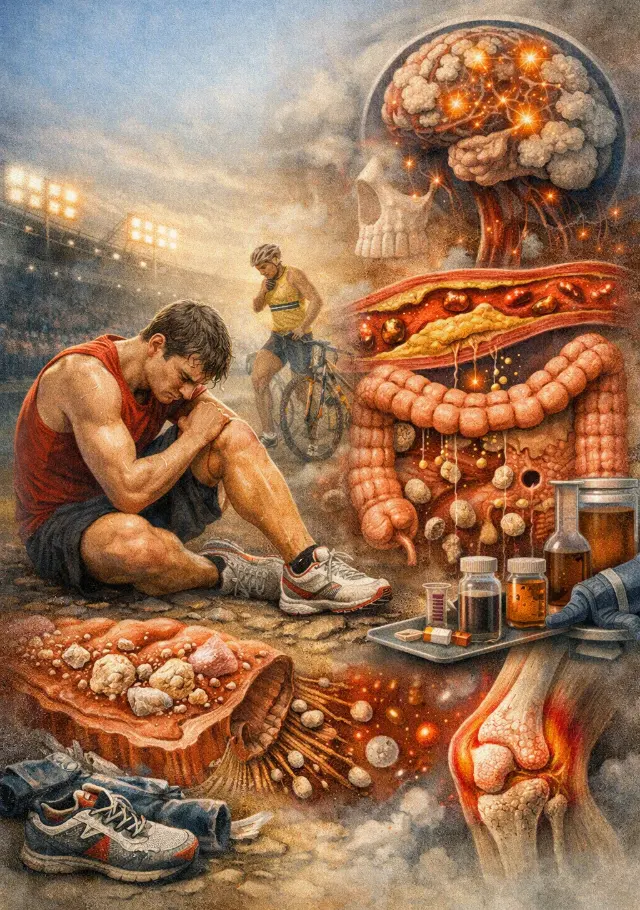
Intensive sport is often presented as a source of health and vitality. Yet when practiced without discernment or combined with an unsuitable modern diet, it can reveal or amplify accumulation. Despite their apparent robustness, athletes are not spared the consequences of metabolic overload: persistent muscle pain, tendon inflammation, early osteoarthritis, digestive disturbances, or metabolic disorders.
Conventional medicine explains these phenomena through repeated microtrauma, exertion-related oxidative stress, or hormonal imbalances induced by intensive training. These explanations are relevant but insufficient to account for the coherence of symptoms observed in athletes.
From the perspective of diseases of accumulation, intensive sport acts as a revealing factor: it highlights the chronic overload imposed by modern diets. Cooked fats, dairy products, and refined sugars saturate enzymes, disrupt biological signals, and weaken tissues. Muscles and tendons challenged by exertion become sites of pain and inflammation. Overloaded joints wear out faster. Already weakened metabolism struggles to meet the body's increased needs.
The ancestral or hypotoxic diet offers a powerful complementary response. By excluding dairy products, cooked fats, and refined sugars and favoring uncooked virgin oils, fresh fruit and vegetables, and gentle cooking, it lightens enzymatic work and restores biological coherence. Clinical observations show that athletes adopting this diet recover faster, experience less chronic pain, and improve performance.
This Family Clinic booklet offers a new interpretation: understand athletes' problems as manifestations of accumulation aggravated by exertion, and show that nutritional reform can transform sport into a factor of lasting health. It conveys a message of hope: sport combined with an ancestral diet becomes a tool for vitality and longevity rather than a source of overload.
Muscular and tendon accumulation
Intensive sport places heavy demands on muscles and tendons. Although exertion is beneficial when combined with a suitable diet, it can become a factor in wear and pain when the body is already saturated. Athletes then complain of persistent muscle soreness, muscle tightness, chronic tendinitis, and difficult recovery after training or competition.
Conventional medicine explains these phenomena through repeated microtrauma, lactic acid accumulation, and oxidative stress. Tendons, with limited blood supply, heal slowly, and muscles subjected to repeated exertion become exhausted. These explanations are relevant but insufficient to account for the coherence of symptoms observed in athletes.
From the perspective of diseases of accumulation, muscle and tendon pain reflect chronic overload. Cooked fats, dairy products, and refined sugars saturate enzymes, disrupt biological signals, and weaken tissues. Waste accumulates in muscle and tendon fibers, causing inflammation and rigidity. Sporting exertion, rather than strengthening the body, reveals and worsens this overload.
The ancestral or hypotoxic diet offers a powerful complementary response. By excluding dairy products, cooked fats, and refined sugars and favoring uncooked virgin oils, fresh fruit and vegetables, and gentle cooking, it lightens enzymatic work and restores muscular coherence. Clinical observations show that athletes recover faster, suffer less tendinitis, and see performance improve.
This improvement confirms that muscular and tendon accumulation is indeed a disease of overload: when diet respects human enzymatic capacities, muscles and tendons remain flexible and resilient. Modern nutrition, too rich in cooked fats and refined sugars, imposes excessive work on enzymes and weakens tissues. Returning to an ancestral diet relieves this overload and preserves muscle and tendon health.
Thus, sporting pain is not an inevitable fate. It recalls the fragility of muscles and tendons in the face of accumulation, but also shows that nutrition can be a powerful tool for transforming exertion into a source of vitality rather than suffering.
Joint accumulation
Joints are essential structures for mobility and sporting performance. Yet in many athletes, they become sites of early pain, stiffness, and sometimes premature osteoarthritis. This paradox — worn joints despite regular physical activity — actually reflects joint accumulation aggravated by exertion.
Conventional medicine explains these phenomena through repeated microtrauma, mechanical cartilage wear, and chronic inflammation. Athletes subjected to repeated loads see their cartilage develop cracks, synovial fluid deteriorate, and joints lose flexibility. These explanations are relevant but insufficient to account for the coherence of observed symptoms.
From the perspective of diseases of accumulation, early osteoarthritis in athletes reflects chronic overload. Cooked fats, dairy products, and refined sugars saturate enzymes, disrupt biological signals, and weaken joint tissues. Waste accumulates in cartilage and synovial fluid, causing inflammation and rigidity. Sporting exertion, rather than strengthening joints, reveals and worsens this overload.
The ancestral or hypotoxic diet offers a powerful complementary response. By excluding dairy products, cooked fats, and refined sugars and favoring uncooked virgin oils, fresh fruit and vegetables, and gentle cooking, it lightens enzymatic work and restores joint coherence. Clinical observations show that athletes adopting this diet have less pain, see mobility improve, and slow osteoarthritis progression.
This improvement confirms that joint accumulation is indeed a disease of overload: when diet respects human enzymatic capacities, joints remain flexible and resilient. Modern nutrition, too rich in cooked fats and refined sugars, imposes excessive work on enzymes and weakens cartilage. Returning to an ancestral diet relieves this overload and preserves joint health.
Thus, early osteoarthritis in athletes is not an inevitable fate. It recalls the fragility of joints in the face of accumulation but also shows that nutrition can be a powerful tool for transforming exertion into a source of vitality rather than suffering.
Metabolic accumulation
Metabolism is the body's engine, responsible for transforming nutrients into energy and regulating hormonal balance. Athletes have increased energy needs: muscles require more glucose, lipids, and proteins to function and regenerate. Yet when modern diets do not meet these needs, they become a source of overload and imbalance.
Conventional medicine describes these problems as exertion-related disorders: reactive hypoglycemia, hormonal imbalances, micronutrient deficiencies, and excess free radicals. Athletes may experience chronic fatigue, reduced performance, digestive disturbances, or disturbed sleep. These explanations are relevant but insufficient to account for the coherence of observed symptoms.
From the perspective of diseases of accumulation, modern diets impose metabolic overload. Cooked fats, dairy products, and refined sugars saturate enzymes, disrupt biological signals, and weaken metabolism. Waste accumulates in the liver, pancreas, and muscle tissues, causing inflammation and imbalance. Sporting exertion, rather than strengthening the body, reveals and worsens this overload.
The ancestral or hypotoxic diet offers a powerful complementary response. By excluding dairy products, cooked fats, and refined sugars and favoring uncooked virgin oils, fresh fruit and vegetables, and gentle cooking, it lightens enzymatic work and restores metabolic coherence. Clinical observations show that athletes adopting this diet stabilize blood glucose, reduce fatigue, and improve recovery.
This improvement confirms that metabolic accumulation is indeed a disease of overload: when diet respects human enzymatic capacities, metabolism remains efficient and adapted to sport's increased demands. Modern nutrition, too rich in cooked fats and refined sugars, imposes excessive work on enzymes and weakens energy balance. Returning to an ancestral diet relieves this overload and preserves metabolic health.
Thus, metabolic disorders in athletes are not an inevitable fate. They recall the fragility of metabolism in the face of accumulation but also show that nutrition can be a powerful tool for transforming exertion into a source of vitality rather than overload.
Hypotoxic nutrition as support for performance and recovery
Intensive sport imposes increased energy and nutritional needs. Working muscles require a diet capable of supporting exertion, promoting recovery, and preventing premature wear. Yet modern diets, rich in cooked fats, dairy products, and refined sugars, do not meet these demands: they overload the body, slow recovery, and weaken tissues.
Conventional medicine recommends high intake of protein, carbohydrates, and antioxidant supplements for athletes. This advice is useful but insufficient to explain why some athletes, despite an apparently balanced diet, experience chronic pain, persistent fatigue, or reduced performance.
From the perspective of diseases of accumulation, modern diets impose enzymatic overload. Waste accumulates in muscles, tendons, and joints, causing inflammation and rigidity. Sport, rather than strengthening the body, reveals and worsens this overload.
The ancestral or hypotoxic diet offers a coherent, powerful response. By excluding dairy products, cooked fats, and refined sugars and favoring uncooked virgin oils, fresh fruit and vegetables, and gentle cooking, it lightens enzymatic work and restores biological coherence. Clinical observations show that athletes adopting this diet recover faster, experience less chronic pain, and improve performance.
This nutritional approach acts as true support for performance and recovery. It enables muscles to regenerate more effectively, tendons to heal faster, and joints to retain flexibility. It reduces oxidative stress, stabilizes metabolism, and promotes better endurance.
Thus, hypotoxic nutrition is more than a method of preventing chronic diseases: it is also a tool for sporting performance. It shows that diet can transform exertion into a source of vitality rather than overload, offering athletes optimal recovery and greater longevity in their practice.
Athlete accounts and clinical observations
Athlete accounts and clinical observations bring a concrete dimension to the accumulation theory. They show that muscle pain, chronic tendinitis, early osteoarthritis, and metabolic disorders are not inevitable outcomes of sport but consequences of dietary overload aggravated by exertion.
Many athletes report that before adopting a hypotoxic diet, they experienced persistent pain, difficult recovery, and reduced performance. Conventional treatments — anti-inflammatory drugs, local injections, dietary supplements — brought temporary relief but did not resolve the underlying problem.
Clinical observations confirm these accounts:
- Athletes maintaining a modern diet rich in cooked fats, dairy products, and refined sugars have a high frequency of tendinitis, early osteoarthritis, and digestive disturbances.
- Those adopting the ancestral diet see pain decrease, recovery improve, and performance stabilize.
- Laboratory analyses show reduced oxidative stress, better blood glucose regulation, and decreased inflammatory markers.
These results illustrate the coherence of diseases of accumulation: intensive sport reveals overload, but hypotoxic nutrition corrects it. Athletes then become particularly valuable witnesses to the ancestral diet's effectiveness. Their experience shows that nutrition can transform exertion into a source of health rather than suffering.
Thus, athlete accounts and clinical observations are more than anecdotes: they are living proof that hypotoxic nutrition is a powerful tool for supporting performance, improving recovery, and preventing premature wear. Sport combined with an ancestral diet becomes a true ally of health and longevity.
Conclusion
Sport is an essential activity for health, vitality, and psychological balance. Yet when practiced in the context of an unsuitable modern diet, it paradoxically becomes a factor in wear and overload. Muscle and tendon pain, early osteoarthritis, metabolic disorders, and difficult recovery are not inevitable outcomes of exertion: they reflect accumulation aggravated by diet.
Conventional medicine precisely describes the mechanisms involved: repeated microtrauma, oxidative stress, reactive hypoglycemia, and micronutrient deficiencies. These explanations are relevant but insufficient to account for the overall coherence of symptoms observed in athletes. The perspective of diseases of accumulation provides a unifying view: intensive sport reveals and amplifies chronic overload imposed by cooked fats, dairy products, and refined sugars.
The ancestral or hypotoxic diet then appears as a powerful complementary response. By excluding dairy products, cooked fats, and refined sugars and favoring uncooked virgin oils, fresh fruit and vegetables, and gentle cooking, it lightens enzymatic work and restores biological coherence. Clinical observations show that athletes adopting this diet recover faster, experience less chronic pain, and improve performance.
This message is fundamental: athletes' problems are not an irreversible, inevitable fate. They can be prevented and corrected through profound nutritional reform. Returning to a diet respectful of human enzymatic capacities relieves overload, restores balance, and transforms sport into a factor of lasting health.
Thus, booklet E reminds us that medicine must be integrative: combine conventional treatments with nutritional approaches to offer athletes comprehensive care. Sport then becomes a tool for vitality, performance, and longevity rather than a source of suffering.