
Foreword
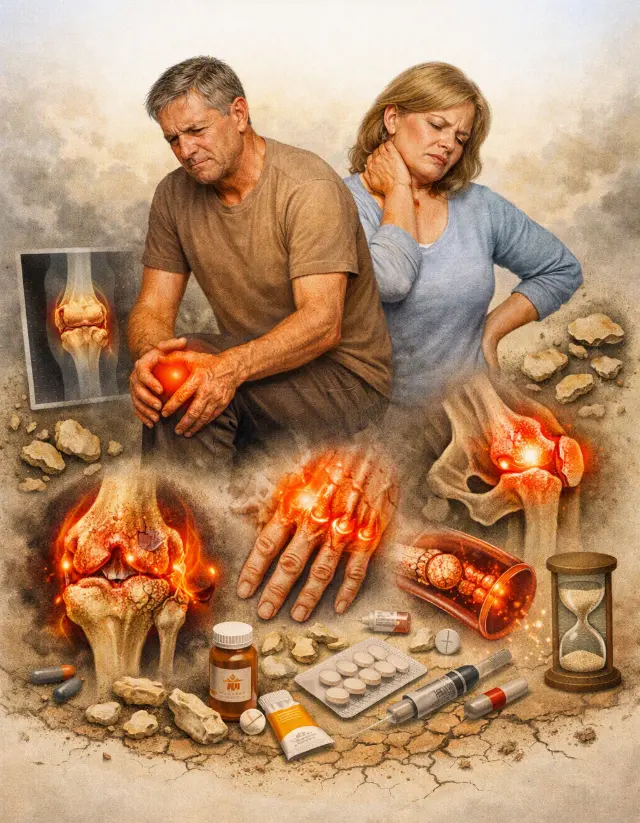
Joint pain is among the most frequent complaints in general practice and rheumatology. It affects every generation: active young adults, older people, and middle-aged people gradually discovering their body's limitations. When chronic, this pain transforms everyday actions into real ordeals: standing up, walking, carrying an object, writing, or even shaking hands can become difficult.
Arthritis encompasses several chronic joint diseases, including osteoarthritis, rheumatoid arthritis, and other inflammatory or degenerative forms. They are characterized by persistent joint involvement, with varied symptoms sharing a constant: pain and functional difficulty. Unlike isolated injuries, arthritis develops over time and profoundly changes quality of life.
At Family Clinic, we consider understanding pain the first step toward relieving it. Our booklets are designed to explain, in simple words, these diseases' mechanisms and possible solutions. We believe nutrition and lifestyle play a central role in prevention and treatment. Our objective is to give patients the keys to understanding what happens in their body and show that alternatives exist to conventional treatments, often limited to symptom management.
This document invites readers to discover a new approach: diseases of accumulation. This theory, developed by Dr. Seignalet, proposes a different interpretation of chronic diseases. It illuminates the limitations of conventional treatments and opens a path toward remission. Accumulation refers to buildup of harmful molecules in tissues as a consequence of modern diets and intestinal hyperpermeability. These deposits disrupt cellular functioning and trigger persistent inflammatory reactions.
By incorporating this perspective, we seek not merely to calm pain but to act on its underlying cause. This involves revising food habits, paying particular attention to lifestyle, and providing appropriate medical support. Patients play an active role in their health: they understand that every meal can influence inflammation and every life choice can strengthen or weaken joints.
This booklet's foreword thus lays the foundations for comprehensive care. The aim is not to deny modern medicine's contributions but to propose complementarity: combine conventional treatments with nutritional and lifestyle measures for lasting benefit. Chronic pain is not an inevitable fate: it can be understood, explained, and alleviated.
Reading this document, patients discover a new perspective: medicine that does more than mask symptoms and seeks to restore biological balance. It is an invitation to regain control of health, recover freedom of movement, and consider remission a real possibility.
Overview of osteoarthritis
Osteoarthritis is the world's most widespread chronic joint disease. It affects millions and is the leading cause of locomotor disability after age 60. Unlike inflammatory rheumatic conditions such as rheumatoid arthritis, osteoarthritis is not autoimmune: it is defined by progressive damage to cartilage and joint structures, without fever or elevated laboratory markers. Pain is described as ‘mechanical’: it appears or worsens with exertion and tends to diminish with rest.
Affected joints
The most affected joints are:
- Knees: the site of knee osteoarthritis, causing pain on walking and difficulty climbing or descending stairs.
- Hips: hip osteoarthritis, often disabling, limiting mobility and potentially requiring a prosthesis.
- Spine: lumbar osteoarthritis or chronic neck pain, with stiffness and radiating pain.
- Hands: visible nodules and deformities, interfering with writing or fine movements.
- Shoulders: pain during raising or rotating movements.
Characteristic symptoms
- Persistent pain, especially during walking or movement.
- Morning stiffness, generally brief but troublesome.
- Joint cracking or rubbing (crepitus).
- Visible long-term deformities (fingers, knees, hips).
- Gradually reduced mobility and loss of muscle strength.
A chronic, progressive disease
Osteoarthritis progresses slowly but inexorably. It can remain moderate for a long time, then worsen and become disabling. Conventional treatments (analgesics, anti-inflammatory drugs, local injections, physiotherapy) provide partial relief but do not stop progression. Many patients live with this pain for years, alternating between periods of respite and painful episodes.
Limitations of the traditional perspective
Traditionally, osteoarthritis is explained by mechanical cartilage wear linked to age or joint overload. Although partly true, this perspective is incomplete. It does not account for early cases (from the forties onward) or involvement of joints that are not overused. Nor does it explain why some patients progress rapidly toward deformity while others remain stable.
The Family Clinic approach
At Family Clinic, we regularly see patients who have lived with this pain for years. Many have tried medications and local injections without lasting success. Our integrative approach offers a new perspective: understand that osteoarthritis is more than ‘wear’ and is also a disease of accumulation. This perspective opens the way to nutritional and lifestyle solutions capable of slowing progression and improving quality of life.
We explain to patients, through simple words and clear diagrams, that cartilage is living tissue capable of regeneration if given the means. Diet, hydration, gentle physical activity, and prevention of joint overload are powerful ways to preserve mobility.
Conclusion: The general overview of osteoarthritis shows a common, chronic, disabling disease whose understanding is evolving. By moving beyond the mechanical perspective and incorporating accumulation, it becomes possible to propose more complete management. Osteoarthritis is not an inevitable fate: it can be slowed, stabilized, and sometimes improved through comprehensive care combining conventional medicine with hypotoxic nutrition.
The accumulation mechanism
Traditionally, osteoarthritis is explained by mechanical cartilage wear: repeated friction, excess body weight, and joint injuries. Although partly accurate, this perspective remains insufficient to explain why osteoarthritis can appear early, sometimes from the forties onward, or affect joints not particularly heavily used. This is where the accumulation theory, developed by Dr. Seignalet and adopted by the Family Clinic approach, comes in.
Stage 1 — The intestine as an entry point
The small intestine plays a central role in joint health. When attacked by modern diets (mutated cereal grains, dairy products, harsh cooking methods, additives), its permeability increases. Tight junctions between intestinal cells loosen, allowing protein fragments, oxidized lipids, or bacterial toxins through. This phenomenon, called ‘intestinal hyperpermeability,’ is now recognized as a key factor in many chronic diseases.
Stage 2 — Passage into the blood
These foreign molecules, normally destroyed or neutralized, enter the bloodstream. The immune system identifies them as intruders, but rather than rapid elimination, they accumulate and attach to certain tissues. Joints, rich in synovial fluid and connective tissues, become favored deposit sites.
Stage 3 — Deposition in cartilage and synovium
Chondrocytes, the cells responsible for producing cartilage, become burdened by this waste. The result:
- Reduced production of collagen and proteoglycans.
- Weakened, cracked cartilage unable to absorb shocks.
- Progressive joint deformity.
This mechanism explains why osteoarthritis is more than age-related ‘wear.’ It can appear early and affect joints that are not overused.
Stage 4 — Immune reaction and low-grade inflammation
Although osteoarthritis is not classified among inflammatory diseases, accumulation causes low-grade inflammation. Immune cells recognizing these deposits as foreign trigger a subtle but persistent reaction. This silent inflammation accelerates cartilage degradation and sustains pain.
Limitations of conventional treatments
Analgesics and anti-inflammatory drugs provide temporary relief but do not stop the cause: accumulation of harmful molecules. Local injections offer respite, but progression continues. Joint prostheses correct consequences but do not prevent new lesions.
The Family Clinic approach
At Family Clinic, we explain this process to patients through simple diagrams and educational booklets. Understanding that osteoarthritis is linked to diet and lifestyle helps them accept a different treatment. We show that every meal can either nourish health or fuel accumulation.
Our protocol relies on:
- Reducing modern foods responsible for intestinal hyperpermeability.
- Introducing a hypotoxic diet rich in fresh plant foods, virgin oils, and light proteins.
- Supporting elimination organs (liver, kidneys, skin, intestine) to promote clearance of deposits.
- Educational support to help patients understand and adopt this approach.
Conclusion: The accumulation mechanism explains why osteoarthritis often resists conventional treatments. It highlights the central role of the intestine and diet in the development of joint degradation. By acting on the cause — intestinal permeability and accumulation of harmful molecules — it becomes possible to slow progression, reduce pain, and improve quality of life durably.
Symptoms and disease course
Osteoarthritis manifests through a set of characteristic clinical signs reflecting progressive degradation of cartilage and joint structures. These symptoms, sometimes subtle initially, progressively become disabling and impair quality of life. Their course is slow but continuous, and every patient has a particular experience depending on the joint affected, pain intensity, and lifestyle.
Typical symptoms
- Mechanical pain: it appears with exertion, intensifies with walking, stair climbing, or carrying loads, and decreases with rest. Unlike inflammatory rheumatic conditions, it is not associated with fever or elevated laboratory markers.
- Morning stiffness: often brief, lasting a few minutes but interfering with the start of the day. It reflects cartilage rigidity and loss of joint flexibility.
- Joint cracking or rubbing: patients perceive sounds or grinding sensations during movement, a sign of irregular, cracked cartilage.
- Visible long-term deformities: knobby fingers, bowed knees, displaced hips. These deformities result from asymmetric wear and bone adaptation.
- Gradually reduced mobility: movements become limited, walking decreases, and everyday activities are hindered.
Disease course
Osteoarthritis follows a slow but inexorable progression. It can remain moderate for a long time, then worsen and become disabling. Initial phases involve occasional discomfort, often attributed to fatigue or age. But over time, pain settles in, movements decrease, and quality of life deteriorates.
Some forms progress rapidly, particularly hip or knee osteoarthritis, potentially causing severe disability within a few years. Others remain stable for a long time, with intermittent pain. This variability explains why every patient needs personalized monitoring.
Limitations of conventional treatments
Conventional treatments provide partial relief:
- Analgesics reduce pain but do not act on the cause.
- Anti-inflammatory drugs reduce low-grade inflammation but weaken the stomach, liver, and kidneys.
- Local injections provide temporary respite but do not stop progression.
- Joint prostheses correct consequences but do not prevent new lesions.
Thus, conventional medicine focuses on symptoms without correcting the accumulation mechanism sustaining degradation.
The Family Clinic approach
At Family Clinic, we offer comprehensive care: nutritional assessment, personalized advice, and regular monitoring. We know chronic pain isolates and discourages. This is why we support patients step by step with clear explanations and concrete solutions.
Our approach relies on:
- Understanding the accumulation mechanism: explain to patients that diet directly influences disease progression.
- Adoption of the hypotoxic diet: reduce harmful foods and introduce fresh, living products.
- Gentle, suitable physical activity: preserve mobility without attacking joints.
- Psychological and educational support: restore confidence and motivation.
Conclusion: Osteoarthritis symptoms reflect slow but persistent cartilage degradation. Their often disabling course can be slowed through comprehensive care combining conventional medicine with hypotoxic nutrition. Understanding these mechanisms and acting early transforms patients' everyday lives: less pain, more mobility, and longer healthy life expectancy.
The role of the hypotoxic diet
The hypotoxic diet holds a central place in osteoarthritis management under the Family Clinic approach. It is more than a simple diet: it is a true therapeutic strategy intended to reduce intake of harmful molecules responsible for accumulation and joint degradation.
Fundamental principles
The hypotoxic diet rests on a simple idea: eliminate modern foods that attack the intestine and promote hyperpermeability, while favoring natural, fresh, minimally processed products. The implicated foods are mainly:
- Mutated cereal grains (modern wheat, hybrid corn) whose proteins are poorly tolerated by the body.
- Dairy products that disrupt digestion and sustain low-grade inflammation.
- Harsh cooking methods (grilling, frying, high-temperature ovens) that generate oxidized, toxic molecules.
- Industrial products rich in additives, refined sugars, and trans fats.
Conversely, the hypotoxic diet encourages:
- Fresh fruit and vegetables, raw or cooked at low temperatures.
- Virgin oils (olive, rapeseed, walnut) rich in essential fatty acids.
- Light proteins (fish, lean poultry, legumes).
- Gentle cooking (steaming, simmering, covered cooking) that preserves nutrients.
Observed effects
Clinical results are often rapid and tangible:
- Markedly reduced pain within weeks.
- Improved mobility through better joint flexibility.
- Slower osteoarthritis progression, sometimes with lasting stabilization.
- Improved morale and energy through easier digestion and better-quality sleep.
These benefits are not anecdotal: they recur in many patients, confirming the direct link between diet and accumulation. If the diet is abandoned, relapse is almost constant, demonstrating the osteoarthritic process's dependence on dietary intake.
Educational and practical dimension
At Family Clinic, we have incorporated this diet into our protocols. We support patients through dietary transition with:
- Simple recipes adapted to local habits.
- Practical booklets explaining dietary principles step by step.
- Medical monitoring to adjust treatments and measure progress.
- Educational workshops to learn to cook differently without losing pleasure.
We know changing food habits is a challenge. This is why we favor gradual progression: replace certain foods, introduce new flavors, and rediscover forgotten products. The aim is for the hypotoxic diet to become a sustainable lifestyle rather than a temporary constraint.
A prevention strategy
Beyond treatment, the hypotoxic diet is a tool for prevention. By limiting waste accumulation and reducing low-grade inflammation, it protects joints even before symptoms appear. It also helps prevent other chronic diseases: metabolic disorders, cardiovascular diseases, and autoimmune conditions.
Conclusion: The role of the hypotoxic diet in osteoarthritis is substantial. It acts on the underlying cause: accumulation and intestinal hyperpermeability. By eliminating harmful foods and favoring living foods, it reduces inflammation, preserves joints, and restores patients' quality of life. This diet is not a secondary option: it lies at the heart of Family Clinic's therapeutic strategy and opens a path toward remission and lasting prevention.
Synthesis and prevention
Osteoarthritis is a common, chronic, disabling condition. It is more than simple mechanical cartilage wear: its accumulation mechanism explains why it becomes persistent and resistant to conventional treatments. Understanding this systemic dimension transforms management and opens a path toward prevention and remission.
A new understanding of osteoarthritis
The traditional perspective considers osteoarthritis an inevitable consequence of aging or joint overload. Yet many cases appear early, sometimes from the forties onward, and affect joints that are not overused. The accumulation theory offers a complementary explanation: buildup of harmful molecules in cartilage and synovium promoted by modern diets and intestinal hyperpermeability. This interpretation broadens the therapeutic field: rather than solely relieving symptoms, it becomes possible to act on the cause.
The pillars of prevention
Prevention relies on a comprehensive approach incorporating several dimensions:
- Hypotoxic diet: reduce mutated cereal grains, dairy products, and harsh cooking methods; favor fresh fruit and vegetables, virgin oils, and light proteins.
- Adequate hydration: water facilitates waste elimination and supports the kidneys' clearance role.
- Gentle, regular physical activity: walking, yoga, swimming, maintaining mobility without attacking joints.
- Everyday stretching: preserve flexibility and limit stiffness.
- Avoid joint overload: control weight, adapt movements, and use assistive devices if necessary.
- Regular medical monitoring: essential to monitor progression, adjust treatments, and prevent complications.
Transformation of management
This new perspective transforms patients' relationship with their disease. Rather than passively undergoing symptomatic treatments, they play an active role in their health. Understanding that every meal can influence inflammation and joint degradation is a revelation: patients regain power over everyday life. This empowerment is a powerful psychological lever: it restores hope, motivation, and confidence.
Toward regained freedom
The joint burdened by accumulation is no longer condemned to destruction. By reducing accumulation, supporting elimination organs, and adopting suitable lifestyle practices, it is possible to slow or even reverse the process. Patients regain some mobility, less pain, and better energy. Prevention thus becomes a strategy for freedom: freedom of movement, freedom of choice, and freedom to live without relying solely on medications.
Conclusion
Osteoarthritis is not an inevitable fate. It reflects a systemic imbalance that can be corrected. Hypotoxic nutrition, hydration, physical activity, and medical monitoring are the pillars of comprehensive care. This approach, centered on the cause rather than solely symptoms, opens a path toward remission and lasting prevention.
At Family Clinic, we believe health comes through understanding and empowerment. Our booklets, consultations, and practical workshops are designed to help you regain control of your health. By adopting mindful eating and lifestyle practices respectful of the body, everyone can hope to preserve joints, reduce pain, and regain quality of life.