
Foreword
Arthritis encompasses a group of inflammatory joint diseases that, unlike osteoarthritis, are characterized by persistent inflammation, intense pain, swelling, and sometimes fever. They affect every generation, from young adults to older people, and can become disabling if not properly managed. Rheumatoid arthritis, spondyloarthropathies, gout, and certain infectious forms of arthritis are well-known examples within this broad group of diseases.
At Family Clinic, we know chronic pain isolates and discourages. It impairs social life, weakens morale, and reduces mobility. Many patients have lived with pain for years without truly understanding its origin. Our role is to explain, in simple words, what happens in their joints and offer comprehensive care. We believe nutrition and lifestyle play a central role in prevention and treatment.
Unlike conventional treatments focused on suppressing symptoms through anti-inflammatory drugs or immunosuppressants, our approach highlights diseases of accumulation. According to this theory, certain poorly digested dietary and bacterial molecules cross the intestinal barrier and deposit in joints. These deposits trigger an immune reaction that sustains inflammation and progressively destroys cartilage and bone.
This perspective illuminates the limitations of conventional treatments: they temporarily relieve symptoms but do not stop the cause. Conversely, an appropriate diet, called hypotoxic, can reduce intake of harmful molecules, restore intestinal permeability, and decrease joint deposits. Observed results are encouraging: markedly reduced pain, less swelling, improved mobility, and slower disease progression.
This booklet invites readers to discover a new approach. The aim is not to deny modern medicine's contributions but to propose a complementary path centered on understanding and prevention. By understanding that diet directly influences inflammation, patients play an active role in their health. They regain some freedom of movement and better quality of life.
At Family Clinic, we support patients step by step: clear explanations, educational booklets, simple recipes, and practical workshops. We know changing food habits requires time and support. This is why we offer a gradual transition adapted to each profile so the hypotoxic diet becomes a sustainable lifestyle.
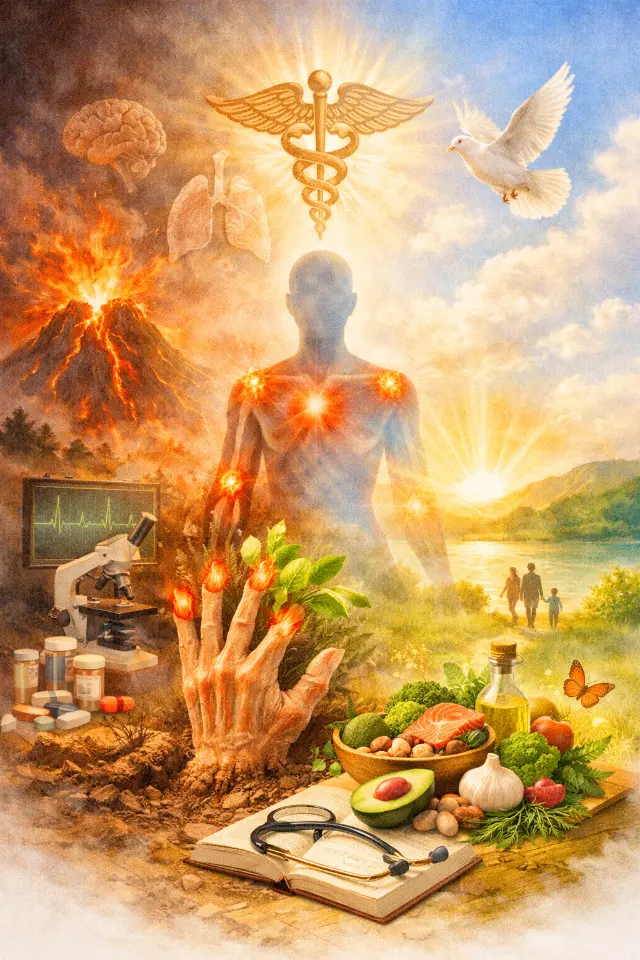
This booklet's foreword thus lays the foundations: arthritis is not an inevitable fate. By understanding its mechanisms and adopting suitable lifestyle practices, it is possible to relieve pain, prevent deformities, and preserve mobility. This document is designed as a practical guide, a source of hope, and a tool for reclaiming health.
General overview of arthritis
Arthritis encompasses a group of inflammatory joint diseases distinguished by persistent joint inflammation. Unlike osteoarthritis, a noninflammatory degenerative disease, arthritis manifests through intense pain, swelling, local warmth, and sometimes redness. It can affect one joint or several, and its course is often chronic, with painful flare-ups alternating with periods of relative remission.
Diversity of arthritis forms
Among the best-known forms are:
- Rheumatoid arthritis: an autoimmune disease progressively destroying joints, causing deformities and disability.
- Spondyloarthropathies: affecting the spine and sacroiliac joints, causing back pain, stiffness, and sometimes eye or skin involvement.
- Infectious arthritis: caused by bacteria or viruses, requiring urgent management to avoid joint destruction.
- Metabolic arthritis: such as gout, linked to accumulation of uric acid crystals in joints and causing extremely painful attacks.
These diseases cause substantial, sometimes disabling functional difficulty and can impair quality of life. They are not confined to local involvement: chronic inflammation can have general effects on the body, promoting fatigue, metabolic disorders, and diminished morale.
Impact on everyday life
At Family Clinic, we regularly see patients with chronic arthritis. Many have lived with pain for years without truly understanding its origin. Some have had to abandon professional or sporting activities; others see social life reduced by fatigue and morning stiffness. Nighttime pain disturbs sleep, increasing fatigue and discouragement.
Our role is to explain, in simple words, what happens in their joints. Understanding that inflammation is not an inevitable fate but the result of a biological process influenced by diet and lifestyle is a revelation for many. This education restores hope and opens the way to comprehensive management.
Limitations of conventional treatments
Conventional treatments rely on anti-inflammatory drugs, immunosuppressants, and biological therapies. They provide relief, sometimes striking, but do not cure the disease. They address consequences without correcting underlying causes. In addition, side effects can be substantial: weakened immunity, digestive disorders, and liver or kidney damage.
This is why proposing a complementary approach is essential. Hypotoxic nutrition, hydration, gentle physical activity, and prevention of accumulation are powerful ways to reduce inflammation and preserve joints.
A comprehensive perspective
The general overview of arthritis shows that it is not an isolated problem but a systemic imbalance. Joints become the visible site of an invisible process: accumulation of harmful molecules, an inappropriate immune reaction, and the body's inability to eliminate waste effectively.
At Family Clinic, we emphasize this comprehensive perspective. Arthritis is more than a joint disease: it reflects an underlying accumulation state, a saturated body, and a lifestyle no longer respecting the body's natural laws.
The accumulation mechanism in arthritis
The accumulation theory offers a complementary explanation to conventional mechanisms of joint inflammation. According to Dr. Seignalet and other researchers, certain poorly digested dietary and bacterial molecules cross the intestinal barrier and enter the blood. Once circulating, they deposit in joints, disrupting local cell functioning and triggering an inappropriate immune reaction.
Stage 1 — A weakened intestinal barrier
When attacked by modern diets (mutated cereal grains, dairy products, harsh cooking methods, additives), the intestine becomes permeable. Tight junctions between intestinal cells open, allowing protein fragments, oxidized lipids, or bacterial toxins through. This phenomenon, called ‘intestinal hyperpermeability,’ is now recognized as a key factor in many inflammatory and autoimmune diseases.
Stage 2 — Passage into the blood
These foreign molecules, normally destroyed or neutralized, enter the bloodstream. The immune system identifies them as intruders. But instead of rapid elimination, they accumulate and attach to certain tissues, particularly joints, which become favored deposit sites.
Stage 3 — Deposition in joints
Joints, rich in connective tissue and synovial fluid, offer favorable conditions for these molecules to accumulate. They infiltrate cartilage and the synovial membrane, disrupting cellular balance. Local cells confronted by these deposits send distress signals activating the immune system.
Stage 4 — Immune reaction and inflammation
Immune cells, recognizing these deposits as foreign, attack joint tissues themselves. This autoimmune process causes:
- Chronic inflammation with production of pro-inflammatory cytokines.
- Persistent pain due to irritation of nerve endings.
- Swelling and local warmth linked to increased blood flow and exudation.
- Progressive cartilage and bone destruction, leading to joint deformity.
Why conventional treatments fail
Anti-inflammatory drugs provide temporary relief by blocking inflammatory mediators but do not stop the cause: accumulation of harmful molecules. Immunosuppressants reduce immune activity at the cost of overall weakening of the body. The source of the problem — accumulation — remains intact.
The Family Clinic approach
At Family Clinic, we explain this process to patients through clear diagrams and educational booklets. Understanding that diet can influence inflammation is a revelation for many. We show that every meal can either nourish health or fuel accumulation.
Our protocol relies on:
- Reducing modern foods responsible for intestinal hyperpermeability.
- Introducing a hypotoxic diet rich in fresh plant foods, virgin oils, and light proteins.
- Supporting elimination organs (liver, kidneys, skin, intestine) to promote clearance of deposits.
- Psychological and educational support to help patients understand and adopt this approach.
Conclusion: The accumulation mechanism explains why arthritis often resists conventional treatments. It highlights the central role of the intestine and diet in the development of chronic inflammation. By acting on the cause — intestinal permeability and accumulation of harmful molecules — it becomes possible to reduce inflammation, slow joint destruction, and improve quality of life durably.
Symptoms and disease course
Arthritis manifests through a set of characteristic clinical signs reflecting persistent joint inflammation. These symptoms, sometimes subtle initially, progressively become disabling and impair quality of life. Their course varies according to arthritis form, but all share a common point: they persist over time and require comprehensive management.
Typical symptoms
- Intense joint pain: often nocturnal, waking patients and disturbing sleep. It worsens with prolonged rest and is partially relieved by movement.
- Swelling and local warmth: the inflamed joint appears swollen, warm to touch, and sometimes red. This reflects increased blood flow and exudation linked to inflammation.
- Prolonged morning stiffness: on waking, joints are stiff, sometimes requiring more than an hour to regain acceptable mobility.
- General fatigue and fever: chronic inflammation acts as permanent stress on the body, causing fatigue, weight loss, and sometimes febrile episodes.
- Long-term joint deformities: without appropriate management, cartilage and bone are destroyed, causing irreversible deformities and functional disability.
The course of arthritis
Each form of arthritis has its own pace of progression:
- Rheumatoid arthritis often progresses through flare-ups, alternating inflammatory phases with partial remissions. Without treatment, it causes rapid joint destruction.
- Spondyloarthropathies progress more slowly but cause increasing spinal stiffness, potentially reaching ankylosis.
- Gout manifests through extremely painful acute attacks separated by periods of respite. Over time, uric acid deposits deform joints.
- Infectious arthritis requires rapid intervention: its course can be fulminant and destroy a joint within days.
Limitations of conventional treatments
Conventional treatments (anti-inflammatory drugs, immunosuppressants, biological therapies) provide real relief but do not cure the disease. They reduce symptom intensity, sometimes strikingly, but the underlying cause — accumulation and buildup of harmful molecules — remains. In addition, side effects are sometimes substantial: weakened immunity, digestive disorders, and liver or kidney damage.
The Family Clinic approach
At Family Clinic, we offer a complementary approach: hypotoxic nutrition, medical monitoring, and practical advice. We know chronic pain affects morale and social life. This is why we support patients step by step with concrete, suitable solutions. Our objective is twofold: relieve symptoms and slow disease progression by acting on its causes.
We emphasize prevention: adopt a hypotoxic diet, maintain adequate hydration, practice gentle regular physical activity, and ensure ongoing medical monitoring. These measures not only reduce symptom intensity but also preserve mobility and prevent irreversible deformities.
Conclusion: Arthritis symptoms reflect chronic inflammation that progressively undermines joints and quality of life. Their often disabling course can be slowed through comprehensive care combining conventional medicine with hypotoxic nutrition. Understanding these mechanisms and acting early transforms patients' everyday lives: less pain, more mobility, and longer healthy life expectancy.
The role of the hypotoxic diet
The hypotoxic diet holds a central place in arthritis management under the Family Clinic approach. It is more than a simple restrictive diet: it is a true therapeutic strategy intended to reduce intake of harmful molecules responsible for accumulation and chronic inflammation.
Fundamental principles
The hypotoxic diet rests on a simple idea: eliminate modern foods that attack the intestine and promote hyperpermeability, while favoring natural, fresh, minimally processed products. The implicated foods are mainly:
- Mutated cereal grains (modern wheat, hybrid corn) whose proteins are poorly tolerated.
- Dairy products that disrupt digestion and promote inflammation.
- Harsh cooking methods (grilling, frying, high-temperature ovens) that generate oxidized, toxic molecules.
- Industrial products rich in additives, refined sugars, and trans fats.
Conversely, the hypotoxic diet encourages:
- Fresh fruit and vegetables, raw or cooked at low temperatures.
- Virgin oils (olive, rapeseed, walnut) rich in essential fatty acids.
- Light proteins (fish, lean poultry, legumes).
- Gentle cooking (steaming, simmering, covered cooking) that preserves nutrients.
Observed effects
Clinical results are often rapid and tangible:
- Markedly reduced pain within weeks.
- Less swelling and improved mobility.
- Slower disease progression, sometimes with lasting stabilization.
- Improved morale and energy through easier digestion and better-quality sleep.
These benefits are not anecdotal: they recur in many patients, confirming the direct link between diet and inflammation. If the diet is abandoned, relapse is almost constant, demonstrating the inflammatory process's dependence on dietary intake.
Educational and practical dimension
At Family Clinic, we have incorporated this diet into our protocols. We support patients through dietary transition with:
- Simple recipes adapted to local habits.
- Practical booklets explaining dietary principles step by step.
- Medical monitoring to adjust treatments and measure progress.
- Educational workshops to learn to cook differently without losing pleasure.
We know changing food habits is a challenge. This is why we favor gradual progression: replace certain foods, introduce new flavors, and rediscover forgotten products. The aim is for the hypotoxic diet to become a sustainable lifestyle rather than a temporary constraint.
A prevention strategy
Beyond treatment, the hypotoxic diet is a tool for prevention. By limiting waste accumulation and reducing low-grade inflammation, it protects joints even before symptoms appear. It also helps prevent other chronic diseases: metabolic disorders, cardiovascular diseases, and autoimmune conditions.
Conclusion: The role of the hypotoxic diet in arthritis is substantial. It acts on the underlying cause: accumulation and intestinal hyperpermeability. By eliminating harmful foods and favoring living foods, it reduces inflammation, preserves joints, and restores patients' quality of life. This diet is not a secondary option: it lies at the heart of Family Clinic's therapeutic strategy and opens a path toward remission and lasting prevention.
Synthesis and prevention
Arthritis is a major public health challenge: chronic, disabling diseases affecting every generation and profoundly impairing quality of life. Yet the accumulation theory and hypotoxic nutritional approach offer a promising therapeutic path capable of transforming management.
A new understanding of arthritis
Traditionally, arthritis is seen as autoimmune or inflammatory disease requiring intensive treatments. But Family Clinic's perspective highlights a broader mechanism: accumulation of harmful molecules in joints promoted by modern diets and intestinal hyperpermeability. This interpretation opens a new prospect: rather than solely relieving symptoms, it becomes possible to address the cause.
The pillars of prevention
Prevention relies on simple but powerful actions:
- Hypotoxic diet: limit mutated cereal grains, dairy products, and harsh cooking methods; favor fresh plant foods, virgin oils, and light proteins.
- Adequate hydration: water facilitates waste elimination and supports the kidneys' clearance role.
- Gentle, regular physical activity: walking, yoga, swimming, maintaining mobility without attacking joints.
- Regular medical monitoring: essential to adapt treatments, monitor progression, and prevent complications.
Combined, these measures reduce low-grade inflammation, preserve joint function, and improve quality of life. They do not replace conventional medicine but enrich it by adding a causal and preventive dimension.
Transformation of management
Family Clinic's perspective transforms patients' relationship with their disease. Rather than passively undergoing treatments, they play an active role in their health. Understanding that every meal can influence inflammation is a revelation: patients regain power over everyday life. This empowerment is a powerful psychological lever: it restores hope, motivation, and confidence.
Toward regained freedom
The inflamed joint is no longer condemned to destruction. By reducing accumulation, supporting elimination organs, and adopting suitable lifestyle practices, it is possible to slow or even reverse the process. Patients regain some mobility, less pain, and better energy. Prevention thus becomes a strategy for freedom: freedom of movement, freedom of choice, and freedom to live without relying solely on medications.
Conclusion
Arthritis is not an inevitable fate. It reflects a systemic imbalance that can be corrected. Hypotoxic nutrition, hydration, physical activity, and medical monitoring are the pillars of comprehensive care. This approach, centered on the cause rather than solely symptoms, opens a path toward remission and lasting prevention.
At Family Clinic, we believe health comes through understanding and empowerment. Our booklets, consultations, and practical workshops are designed to help you regain control of your health. By adopting mindful eating and lifestyle practices respectful of the body, everyone can hope to preserve joints, reduce pain, and regain quality of life.