
Foreword
Many patients describe symptoms that initially seem trivial: persistent fatigue despite rest, concentration difficulties, faltering memory, recurring headaches, unusual irritability. Some speak of sudden anxiety, developing phobias or disturbed sleep that no longer restores them. Others experience emotional hypersensitivity, a tendency towards depression or permanent nervousness. Experienced daily, these neurological and behavioural problems impair quality of life and are often attributed to stress or ageing. Yet they frequently reflect a deeper reality: the silent action of chronic inflammation and hyperinsulinism.
This clinical experience is the starting point of our reflection. Patients do not see inflammation, but feel its effects: anxiety, phobias, cognitive problems. These manifestations are not imaginary; they are rooted in precise biological mechanisms. Chronic inflammation acts like an ember that never goes out, sending chemical signals that disrupt the brain. Hyperinsulinism causes blood glucose variations that destabilise emotional balance and increase psychological vulnerability.
Behind every experienced problem, therefore, lies a pathophysiological explanation:
- Pro-inflammatory cytokines modify neurotransmission and favour anxiety.
- Blood glucose fluctuations linked to excess insulin trigger irritability and anxiety attacks.
- Oxidative stress damages neurons and weakens memory.
- Intestinal dysbiosis disrupts the gut–brain axis and sustains cognitive fatigue.
This booklet offers a simple, accessible approach: start with experienced symptoms, connect them to biological mechanisms, then offer practical solutions to soothe this inner flame. The goal is not merely explanation, but to give readers practical means to understand, prevent and reduce these problems.
Through clear, illustrated pages, we will explore:
- Neurological and behavioural manifestations that alert patients.
- Biological mechanisms explaining these symptoms.
- Case studies showing diagnostic difficulty and prevention's importance.
- The foundations of hypotoxic nutrition inspired by Moroccan cooking as a therapeutic tool.
- Everyday actions that strengthen the body and reduce inflammatory conditions.
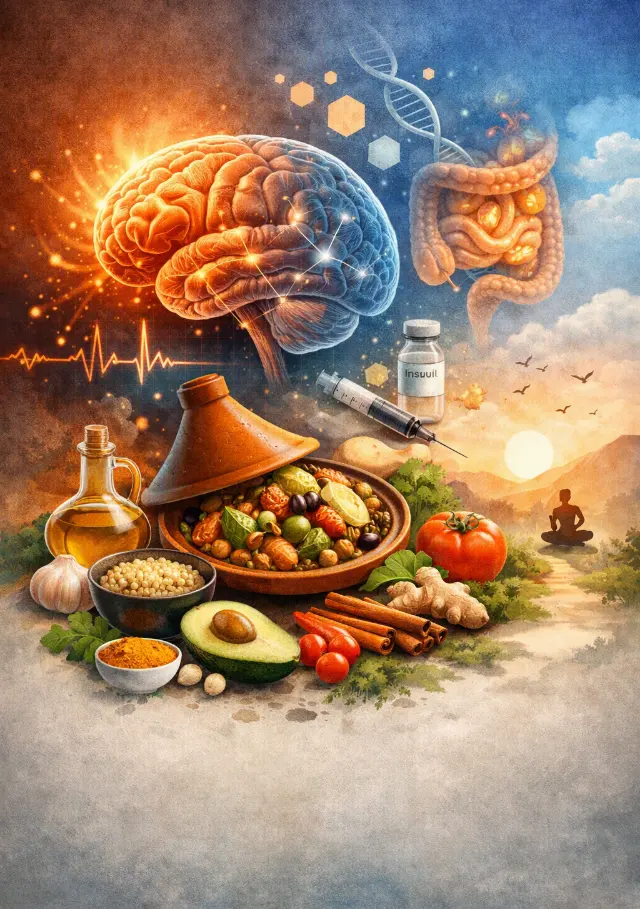
This document follows the philosophy of Cooking to Heal, where each meal becomes an act of care and prevention. Cooking is no longer merely pleasure or tradition: it becomes gentle medicine, capable of calming inflammation and protecting the brain.
By adopting this approach, everyone can turn their plate into an ally against anxiety, phobias and cognitive problems linked to chronic inflammation and hyperinsulinism. This booklet invites us to listen to the body's signals, understand them and soothe them through appropriate lifestyle and food.
Neurological and behavioural manifestations
When chronic inflammation and hyperinsulinism disrupt brain and behaviour
The first signs patients experience are often diffuse and difficult to connect to a precise cause. Yet they reflect real suffering.
Anxiety, phobias and irritability
Many patients describe permanent worry, irrational fear or phobias developing progressively. Anxiety becomes a daily companion, sometimes triggered by ordinary situations. Irritability adds to it: the slightest frustration provokes disproportionate reactions. These problems are not merely psychological; they are rooted in weakened biological conditions.
Sleep disturbances and cognitive fatigue
Sleep loses its restorative function. Patients wake tired, sometimes plagued by nightmares or repeated insomnia. The day is marked by cognitive fatigue: difficulty following a conversation, slowness in intellectual tasks, a feeling of brain fog. This lack of recovery increases anxiety and further weakens the nervous system.
Concentration difficulties and impaired memory
Immediate memory becomes unreliable: forgetting an appointment, losing the thread of reading, no longer remembering a common word. Concentration is unstable, making learning or intellectual work difficult. These cognitive problems are often experienced as humiliating or worrying, strengthening feelings of insecurity.
Depression and emotional hypersensitivity
Some patients drift towards insidious depression: lost interest, persistent sadness, discouragement. Others develop emotional hypersensitivity: an innocuous remark brings tears, a frustration triggers disproportionate anger. Emotional experience becomes unstable, oscillating between dejection and hyperreactivity.
The vicious circle: inflammation ↔ hyperinsulinism ↔ anxiety
These manifestations sustain one another. Chronic inflammation releases cytokines disrupting neurotransmission. Hyperinsulinism causes blood glucose variations destabilising the brain. Anxiety increases cortisol, which in turn worsens inflammation and insulin resistance. Patients are caught in a vicious circle where each problem reinforces the other.
In summary: Neurological and behavioural problems linked to chronic inflammation and hyperinsulinism are not imaginary. They reflect a biological reality that weakens the nervous system and disrupts behaviour. Recognising these symptoms is the first step towards action: understand their origin, prevent them and soothe them through healthy living and hypotoxic nutrition.
Biological mechanisms
Understanding the invisible roots of neurological and behavioural problems
After describing patients' experienced symptoms (anxiety, phobias, sleep disturbances, cognitive fatigue), it is essential to understand why these manifestations appear. Chronic inflammation and hyperinsulinism are not limited to metabolic disorders; they exert direct influence on brain and behaviour.
Pro-inflammatory cytokines and neurotransmission
Cytokines are chemical messengers produced by the immune system. In chronic inflammation, they are released excessively and circulate permanently in the blood. Some cross the blood–brain barrier and disrupt communication between neurons. They modify availability of essential neurotransmitters such as serotonin and dopamine, involved in mood and anxiety regulation. The result: patients become more vulnerable to anxiety disorders, phobias and depressive states.
Blood glucose variations and anxiety
Hyperinsulinism causes rapid blood glucose fluctuations. After a meal rich in sugars or refined flours, insulin rises sharply to lower blood glucose. This sudden fall causes sensations of discomfort: palpitations, sweating, irritability, nervousness. Dependent on constant glucose supply, the brain interprets these signals as a threat and triggers an anxious reaction. Repeated episodes create hypervigilance that may progress to phobias or anxiety attacks.
Oxidative stress and neuronal damage
Chronic inflammation generates excess free radicals responsible for oxidative stress. These aggressive molecules damage cell membranes and neurons, weakening memory and concentration circuits. Patients then experience cognitive fatigue, brain fog, difficulties remembering or concentrating. This oxidative stress also contributes to neuronal degeneration, increasing depressive-disorder and cognitive-decline risk.
Intestinal dysbiosis and the gut–brain axis
The intestinal microbiota plays a key role in regulating immunity and emotional balance. In dysbiosis (imbalance of intestinal flora), the digestive wall becomes permeable and allows toxins and bacteria into the blood. Called “leaky gut”, this phenomenon sustains systemic inflammation and directly influences the gut–brain axis. Signals sent by the disturbed microbiota modify neurotransmitter production and increase anxiety, fatigue and sleep disturbances.
In summary: Neurological and behavioural problems linked to chronic inflammation and hyperinsulinism are not random. They rest on precise biological mechanisms: inflammatory cytokines, blood glucose variations, oxidative stress and intestinal dysbiosis. Understanding these invisible roots helps explain to patients that their symptoms are real, biologically grounded and can be soothed through a comprehensive approach.
The Family Clinic hypotoxic approach – Practical foundations
Foods to avoid
Certain foods directly sustain inflammation and should be reduced or eliminated:
- Industrial products rich in additives and preservatives.
- Refined sugars and white flours.
- Industrial dairy products.
- Processed meats or meat from intensive farming.
- Potatoes excessively rich in starch.
Protective foods
Conversely, hypotoxic nutrition favours fresh, natural products:
- Farm eggs, a source of quality protein.
- Local oily fish (sardines, mackerel, salmon), rich in omega-3.
- Various vegetables (carrots, courgettes, aubergines, beetroot).
- Fresh fruit rich in vitamins and polyphenols.
- Virgin oils (olive, flax, rapeseed).
- Legumes (chickpeas, lentils, beans).
- Nuts and seeds (almonds, walnuts, sesame, flax).
Gentle cooking and anti-inflammatory spices
Cooking protects nutrients when gentle: steaming, simmering, low-temperature baking. Natural spices strengthen the therapeutic effect:
- Turmeric, a powerful anti-inflammatory.
- Ginger, a digestive stimulant.
- Coriander and cumin, soothing and aromatic.
Adapted Moroccan recipes
Moroccan cuisine's richness offers an ideal foundation for the hypotoxic approach.
To explore further and discover a complete selection of recipes adapted to Moroccan tastes, readers are invited to consult the reference work “Cooking to Heal”, Family Clinic Editions (2026). This book brings together 200 validated hypotoxic recipes incorporating local substitutions and the nutritional principles detailed in this booklet.
Case studies and testimonials – Illustrating mechanisms through lived stories
The biological mechanisms of chronic inflammation and hyperinsulinism may seem abstract. Yet they translate into concrete everyday situations. Clinical accounts give these problems a human face and help readers understand their reality better.
Clinical example: hyperinsulinism and anxiety attacks
Mr A., 42, consults for repeated anxiety attacks. He describes sudden palpitations, a choking sensation and intense fear of losing control. These episodes often occur after meals, especially those rich in white bread or pastries. Examination reveals hyperinsulinism with rapid blood glucose variations. The explanations given to the patient are liberating: his attacks are not “imaginary”; they are linked to metabolic imbalances. By adopting hypotoxic nutrition (reducing refined sugars, introducing legumes and oily fish), attacks progressively diminish. The patient regains confidence and understands that his plate can become a therapeutic tool.
MS example: cognitive worsening through inflammation
Mrs B., 36, lives with multiple sclerosis (MS). She reports worsening cognitive problems: unreliable memory, concentration difficulties, mental fatigue. Tests show chronic inflammation increased by a diet rich in industrial products. Hyperinsulinism contributes to energy variations and anxiety. By incorporating a hypotoxic approach inspired by Moroccan cuisine (vegetable tagines, couscous reinterpreted with quinoa, chickpea-enriched soups), she observes improved mental clarity and fewer anxious episodes. Medical follow-up confirms that stabilising inflammation positively impacts cognitive functions.
Arthritis example: inflammation's burden on the mind
Mr C., 55, has rheumatoid arthritis. Beyond joint pain, he describes constant irritability and emotional hypersensitivity. Already responsible for pain, inflammatory cytokines also disrupt neurotransmission. Hyperinsulinism increases mood variations. By adopting hypotoxic nutrition and reducing industrial products, he observes not only less pain but also better emotional stability.
In summary: These testimonials show that neurological and behavioural problems linked to chronic inflammation and hyperinsulinism are not inevitable. They reflect constant interaction between body and mind. Patients understand that their symptoms have a biological explanation and that they can act on them through food choices and an appropriate lifestyle.
The physician and therapist's role is to support this journey: explain, reassure, propose practical solutions.
The patient's role is to accept that every meal, every everyday action, can become an act of care.
Complementary lifestyle measures
Everyday actions to soothe inflammation and hyperinsulinism
Hypotoxic nutrition is an essential pillar for reducing chronic inflammation and hyperinsulinism. But it cannot act alone. Body and mind need a favourable environment and daily habits complementing meals' action. Healthy living then becomes gentle medicine, accessible to all and capable of transforming health durably.
Regular physical activity
Movement is a key to prevention. Walking daily, practising yoga, swimming or cycling stimulates blood circulation, improves insulin sensitivity and reduces inflammation. Physical activity also releases endorphins, true natural antidotes to anxiety and depression. The aim is regularity rather than performance: thirty minutes of gentle walking is better than rare intense exertion.
Restorative sleep
Sleep is invisible medicine. At night, the body regenerates, hormones rebalance and inflammation calms. Conversely, disturbed sleep sustains hyperinsulinism and weakens the nervous system. Keeping regular hours, avoiding screens before bedtime and favouring a quiet, dark environment are simple actions restoring sleep's therapeutic power.
Stress management
Chronic stress fuels inflammation. It increases cortisol, worsening insulin resistance and disrupting neurotransmission. Learning to defuse stress is therefore a priority. Deep breathing, meditation, prayer or simply moments of silence and nature are powerful tools. These practices do not remove life's difficulties, but modify how the body responds.
Reducing environmental toxins
The modern environment exposes us to multiple toxins: tobacco, alcohol, pesticides, food additives, atmospheric pollutants. Each sustains inflammation and weakens metabolism. Reducing their presence is an act of prevention. Choosing natural products, limiting harmful substances and favouring clean air and clear water are simple actions strengthening hypotoxic nutrition's effects.
In summary: Complementary lifestyle measures are everyday medicine. Moving, sleeping, breathing, protecting against toxins: these actions soothe inflammation and reduce hyperinsulinism. Combined with hypotoxic nutrition, they form a comprehensive, accessible and lasting strategy. Every step, every night's sleep, every conscious breath becomes an act of care. Health lies not only on the plate, but in the way of living.
Conclusion
Chronic inflammation and hyperinsulinism: a silent threat to soothe
Chronic inflammation and hyperinsulinism cannot be seen, but are felt every day. They weaken the body, disrupt the brain and alter behaviour.
Anxiety, phobias, sleep disturbances, cognitive fatigue or depression are not isolated inevitabilities; they reflect the silent action of biological mechanisms developing over time. This invisible threat acts like an ember sustaining a vicious circle between metabolism and nervous system.
This booklet has shown that these problems have a clear scientific explanation: pro-inflammatory cytokines disrupting neurotransmission, blood glucose variations triggering anxiety, oxidative stress damaging neurons, intestinal dysbiosis weakening the gut–brain axis. Understanding these biological roots gives meaning to experienced symptoms and opens the way to practical solutions.
The response does not lie solely in drug treatments. It also lies in hypotoxic nutrition and an appropriate lifestyle. Reducing refined sugars, favouring varied vegetables, legumes, virgin oils and gentle cooking, reinterpreting Moroccan dishes to combine pleasure and health: these actions soothe inflammation and stabilise insulin. Added to these are simple but powerful habits: walk daily, sleep enough, manage stress, reduce environmental toxins.
Every meal then becomes an act of care. Every everyday action becomes prevention.
Cooking is no longer merely tradition or pleasure; it becomes gentle medicine capable of protecting the brain and soothing the mind.
This booklet follows the philosophy of Cooking to Heal, where food and lifestyle are healing tools accessible to all. It invites everyone to regain control of health and turn their plate and everyday life into allies against chronic inflammation and hyperinsulinism.